
Life’s A Pile Of…
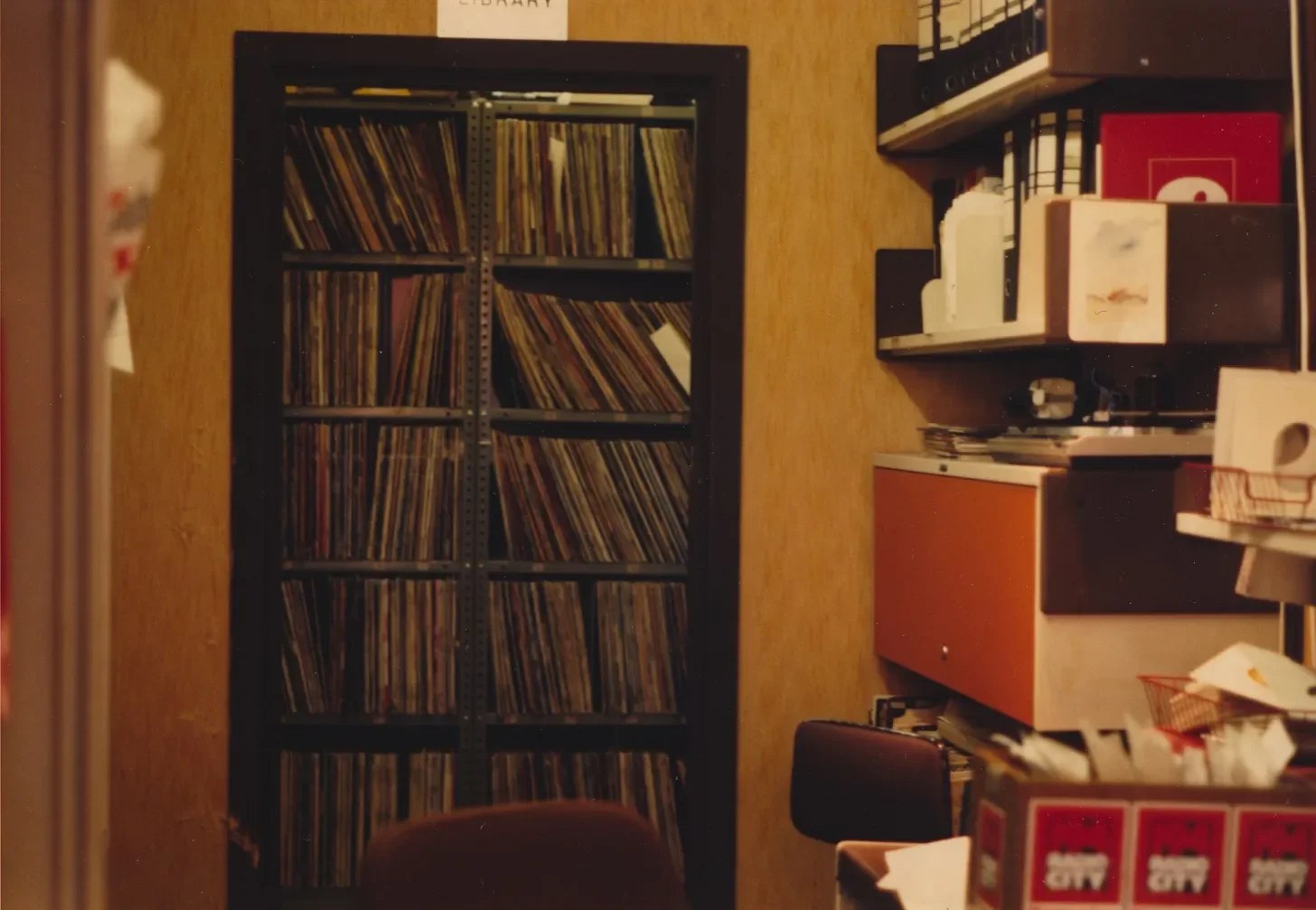
The Local Radio record library - or ‘Gram Library’ as the BBC always called it - and probably still does - has always been my favourite room. In the days before Spotify and Apple Music, when most of us had fewer than 50 albums at home, it was my way into Wonderland. It’s where I met so many musicians for the first time – from the KLF to Michael McDonald to Prefab Sprout. From floor to ceiling, the Gram Library was packed to the gunnels. I’d have loved that many records at home - although the floors would have had to be reinforced with concrete to hold the weight.
A short digression:
When the company in charge of building the current home of one of the BBC’s main regional TV centres was constructing it they ‘forgot’ to install a reinforced floor. As soon as the heavy studio cameras were placed on it, the floor started to sink and that’s why the tripods with wheels - or dollies - were never allowed to be unlocked - after they merrily rolled off downhill during a programme.
And another short digression: they also forgot to install silent air conditioning in the same building. It was so noisy they decided they had to switch it off whenever the 6:30pm programme was going out live. Because of the massive studio lights, the presenters used to end up drenched in sweat by the time the programme’s credits rolled.
Anyway, as they say in the News, back to our main story.
The happiest time of any working day in Local Radio was when I went into the library to pick the music for my show. We had strict limits on the amount of music we were allowed to play because playing music costs money - we were always being told to talk more because it was cheaper. One third speech, two thirds music (or was it supposed to be the other way round?) was the edict of the day.
Every record that was played had be logged, in order that the right money went to the right artist and record label. Woe betide anyone who sent Cher a cheque for 15p when it should have gone to Shannon. But those 15p royalties added up, especially if a song managed to get on a playlist which ensured it would be played a number of times every day. This is how Karl Wallinger from the band, World Party, paid for his children’s education: he wrote the song “She’s the One” which Robbie Williams covered. Every time it was played, Karl got a small amount of money. Count the pennies and the pounds will take care of themselves…and your children’s school fees.
Choosing what music you were going to play in your show was, in my opinion, as much of an art as actually making the original records in the first place. I’d spend hours working out how to go from Male Group to Male Solo via Female/Male duo and then Female Group. You couldn’t play two groups in a row, and you certainly would never play two solo artists back to back, would you? It wasn’t just the gender or number of people in a band that were determining factors: two slow songs would send the listeners to sleep, too many fast ones would cause them palpitations. I can’t hide the fact that I had a few favourite artists - and their records would always get a play and that’s why U2 were so well off in the latter stages of the 1980s. If they ever geotagged their royalties they’d have found one presenter in the North East of England was paying for Bono’s new chandelier.
There were all sorts of theories about the way music should be selected - commercial radio even had a name for it - they called their method of picking playlists “Pre-Mortgage Music” and I’d learnt about it while working at Liverpool’s Radio City in the middle of the 1980s.
The idea goes like this:
A few years ago, two young people - let’s call them Matthew and Lucy had never met. Matthew was a bit of a drinker. He went out on the town four nights a week with his mates when they’d have a few pints before going for a drive with whoever was the designated driver for the night. As they drove around they’d listen to whatever new tunes were on Hits! Hits! Hits! Radio and they LOVED them. Sometimes they’d go to Rotters Night Club and dance the night away. Meanwhile Lucy was listening to Hits! Hits! Hits! Radio all day, everyday - she loved the tunes they played and would dance to them any chance she had.
Then Matthew met Lucy and they fell in love. Together they saved enough money to put down a deposit on a house even though they had to max out a couple of credit cards along the way. Nights out were a rarity and they hated all the new music on the radio because they could never go out dancing to it because they were spending all their time and effort paying off their debts. Life simply wasn’t as much fun as it used to be. And then they found a station that played all those old hits from a few years earlier - and it really cheered them up.
Clever radio programmers want listeners to keep listening - because it attracts advertisers - so they pick songs that people like Matthew and Lucy were listening to before the rot of adulthood set in, when they had lots of disposable income and were happy.
Pre-Mortgage Music.
Anyway, back to my Local Radio station.
It was all going swimmingly. Us presenters were the masters of our own playlists and we revelled in our choices until management decided to screw it all up by telling us what music the listeners should be subjected to.
Overnight, all my knowledge and wit and wisdom was replaced by a miserable bloody computer, sitting silently in the Gram Library. Gone were the days when a news bulletin would end on a story about a rise in the number of vasectomies and I’d quickly slap on Rod Stewart’s “First Cut is the Deepest”. I guarantee that the computer couldn’t do that.
It lurked in the corner like a fortune teller in a fair ground and I’d queue up in front of it waiting for it to spew out its list of records it had decided my lovely, caring listeners would hear. The presenter of the next show would be standing behind me sniggering as they saw I’d been given the order to play Charlie Daniels’ “The Devil Went Down to Georgia” and “The Lady In Red” by Chris de Burgh. There were barcodes to be scanned and durations to be logged. It was intolerable.
I was presenting the breakfast show at this time due to the booting off air of the regular host for one reason or another. Actually it was one reason AND another.
For a few weeks I was the voice that the good people of the (now-disbanded) county of Cleveland and a small part of North Yorkshire woke up to. It took a couple of weeks of presenting the programme until I realised that management liked - how can I put it? - a lie-in.
John Watson, the station manager, would wander past me in the corridor.
“That was a nice piece at ten past seven…”
Or
“You needed to push the council leader harder - it was the eight o’clock lead!”
He never talked about the first hour of the show, between six and seven.
Because.
He.
Was.
Asleep.
And that’s why the second and third hours of my breakfast show were the place to go to hear The Mamas and the Papas, The Shirelles and the occasional track by The Carpenters and the first hour, between 6 and 7, was when Radio Cleveland’s listeners got the chance to hear New Order’s latest, a classic bit of Led Zep or an obscure album track by Tracy Chapman.
And how did I get away with it, you’re asking, when we had to swipe barcodes and account for each second of music? Easy - the gorgeous “Baby Can I Hold You?” By Tracy Chapman (NOT on my playlist) is 3 minutes 14 seconds long. The dreadful “The Night Chicago Died” by Paper Lace which was on my playlist is (yes, you’ve guessed it) 3 minutes 14 seconds long.
Do the math.
The first hour of the show was also the time I developed a deep professional respect for the TV-AM weather presenter Ulrika Jonsson. I used to wistfully watch the TV monitor in the studio while she was on and wondered how I could wangle a way to get in touch.
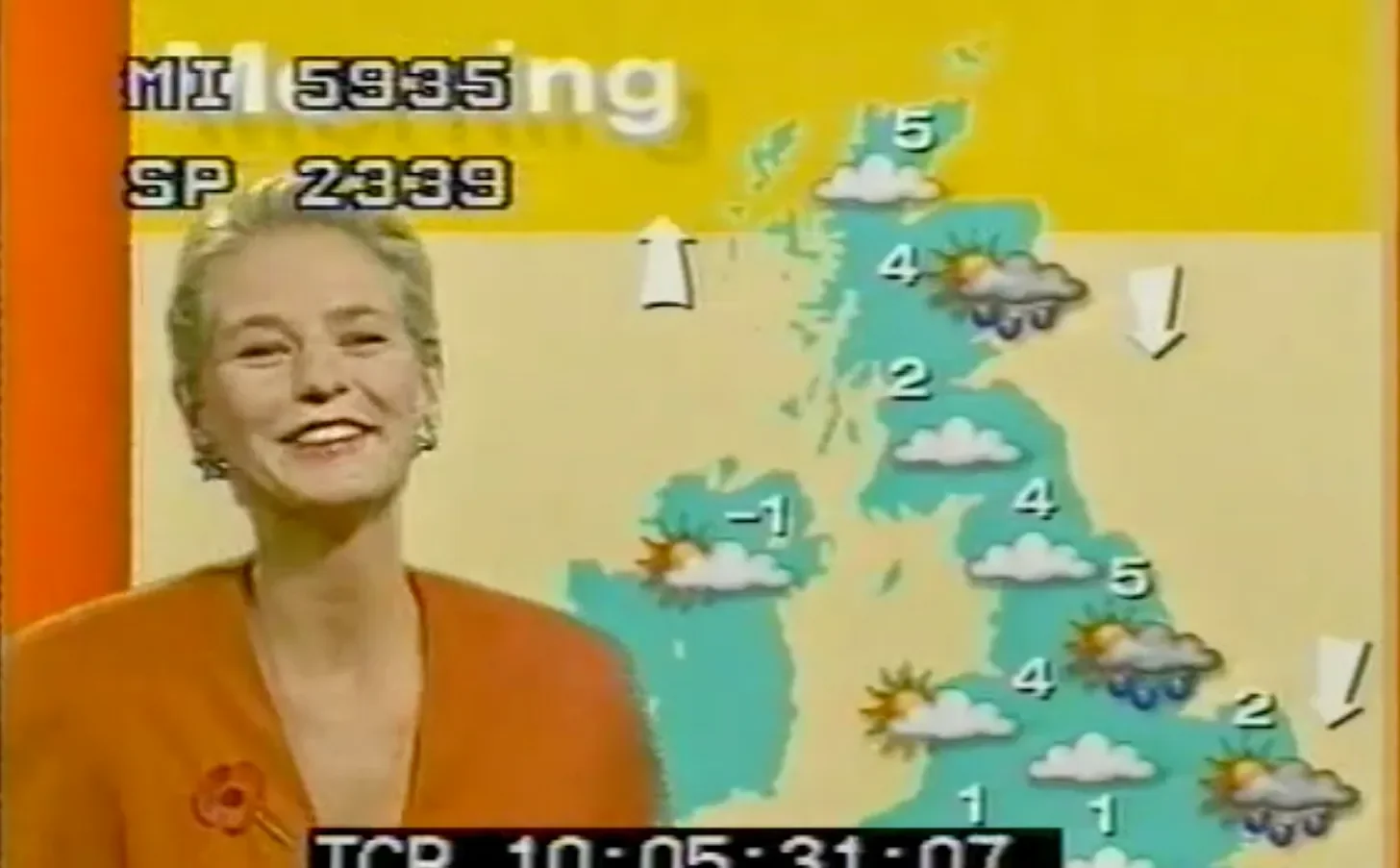
I suggested to Les Cole, the producer of the programme, that she was such a great weather presenter we should get in touch with her for purely professional reasons and see if she’d like to come and work in Middlesbrough. Les didn’t stop laughing for a good few hours.
Realising we didn’t have the money to tempt her up north, I decided to get her on my show another way by replacing the tape recorded weather forecast from the Newcastle branch of the Met office (which we were contractually obliged to play) with Ulrika’s TV-AM weather forecast - I just faded her up on the mixing desk even though she was on ITV and we were the BBC.
And that was the day the station manager woke up early.
I thought I was going to get - not to put too fine a point on it - bollocked but John Watson had something else in mind.
“I’m giving you your own programme. Think of it as promotion,” he said.
I was to be given the Sunday Breakfast show.
“Hang on, John,” I said. “That’s the religious slot isn’t it? Won’t you get in trouble for cancelling it?”
“No,” said John. “You’re the new face of religion.”
I was 23 years old and the only entity I worshipped was Ulrika Jonsson.
Week in, week out, for a year and a half, I produced and presented the religious affairs show with my co-host Bob Hamlett. Bob was a lovely guy but we didn’t have a lot in common. He’d present the show in his Salvation Army uniform while I wore the after effects of a night out on the lash. Occasionally I’d crawl into work in the early hours of Sunday morning straight from a nearby club and fall asleep with my head on the mixing desk in studio 1A. I’d be woken up by Bob’s cheery “Morning, Nick! God’s in the building!”
“Can God make me a cup of tea?” I’d groan.
But Bob was a delight to work with. The most lovely, positive person I ever had the pleasure of working with - both off-air and on.
Nick: “It’s raining.”
Bob: “It’s a treat for the gardens.”
Nick: “And now there’s a massive thunder storm!”
Bob: “Just The Lord shifting his sofa. He moves in mysterious ways, you know.”
The music, was a slightly different matter. I wanted to update the music policy of the show - to try playing things that had been written in the last 150 years. Hymns had a place and that place was in Church. Bob disagreed and so I started a campaign of civil disobedience.
“Now, Nick,” he’d say. “What’s next? I think it’s a rousing rendition of ‘Crown Him With Many Crowns’ isn’t it?”
“No, Bob, it’s time for Van Morrison.”
But over the months ahead, my ability to play what I wanted was beaten back by the Holy Trinity of Bob, the Gram Library computer and the station manager. Until the day I announced on air that I was leaving the show.
News beckoned and I was off to become a journalist and so I was allowed complete control of the music for the last show and I’m sure my lovely audience appreciated the first track - R.E.M.’s Losing My Religion. For my very last record, though, I’d chosen something slightly didactic and mildly humorous:
“Always Look On The Bright Side of Life” by Monty Python was a good, positive, message to send me on my way to a new career as a journalist.
The mixing desks in Local Radio at the time were different in the BBC to anywhere else - they were known as the Mark 3 desk and were wired in a very strange way: to fade the music up, you brought the fader towards you, not away from you. When you ‘opened’ the fader, the track would start playing and when you shut it, it would stop. The faders had a little ‘click’ thing inside them which auto-started and auto-stopped the track. The record decks (yes, we still played vinyl records) were Technics direct-drive SP10s - widely considered to be the best record decks ever built.
Photo by Rob Mawson - quite why I’m answering the phone while presenting a programme is anyone’s guess.
It was 8:56:32 - the song was 3.23 long and the pips at the ‘top of the hour’ were five seconds long. At that precise second I stopped talking and opened the fader. Michael Palin’s voice burst forth.
“Some things in life are bad, they can really make you mad
Other things just make you swear and curse.
When you’re chewing on life’s gristle, don’t grumble, give a whistle
And this’ll help things turn out for the best
And….
Always look on the bright side of life…”
I sat back, raised a cup of tea with Bob and started to pack up my stuff for the last time.
And then I froze.
I was playing this off my own copy of the Life of Brian soundtrack as it wasn’t in the Gram Library for some reason.
That reason was the fourth verse which begins with the words
“Life’s a pile of sh*t when you look at it.”
“Oh Jesus…” I said, out loud. Bob smiled. He’d always known I’d turn to God in the end.
Cold sweat formed on me like a second skin. “Quick,” I screamed. “Pass me a record, any record!” but we were on to the third verse now. No time ton is another track up and cross-fade.
You might wonder what all the fuss was about. It was one little swear word. Four little letters. What offence could they cause? Oh, ye of little faith. This was The Religious Programme. With a Religious Presenter and a Religious Audience who were all just one step away from meeting their maker.
If this swear word went out on air, I reckoned quite a few of them would skip the whole Waiting Room and keel over dead on the spot. This wasn’t a good idea as I was sure my audience figures would suffer.
But I had an answer.
I flicked a couple of dials. On one of the other faders I set up something known as “test tone”. A constant beep. We used it to send a loop of sound to the the audio circuits at football grounds to make sure the wiring was working. All I had to do was fade down the music when the word “sh*t” was sung, open up the fader with the tone on it and then bring the music back up.
This could work.
This would work.
This had to work.
My hands were clammy but I winked at Bob. I could do this. Instead of this being a disaster, it would go down as my greatest achievement - the moment I single-handedly saved the day (from a problem created, admittedly, by my own idiocy). Bob was now aware of what was about to happen (probably due to me repeating the swear word endlessly in the studio) and he was fretting that North East England’s religious community was going to get a dose of the devil over the airwaves.
I stretched my fingers ready for the manoeuvre. The verse started.
“Life’s a pile of…”
I slammed shut the fader and opened the other one.
“Beeeeeep”
It had worked and in that one single moment, I was a saint.
In the next, I was a sinner.
The record decks were SP10s. Instant start, instant stop. As I flung shut the fader, the deck stopped. As I whacked it back open, a quarter of a second later, it started.
“Life’s a pile of Beeeeeep sh*t, when you look at it.”
In the intervening years I’ve wondered about the effect of the beep and concluded that all it did was make things worse: it highlighted what was about to happen - that I was about to let loose a bad word on the airwaves. My audience heard the Beeeeeep, put down the paper, looked at the radio expectantly and were then treated to four letters of filth.
And so, I apologise and I humbly ask for forgiveness.
I let down the production team known as the God Squad who simply shook their heads through the glass window to the side of me.
I let down the station manager who was not best pleased but had actually been fast asleep at the time.
And I let down Bob who wasn’t a Monty Python fan before and certainly wasn’t afterwards.
Sometimes life really IS a pile of Beeeeeeeeep…..