
Ticks
The Teeside Environmental Health Officer lifted the mattress out of the cot and smiled in a satisfied way.
“Well, hello there!”
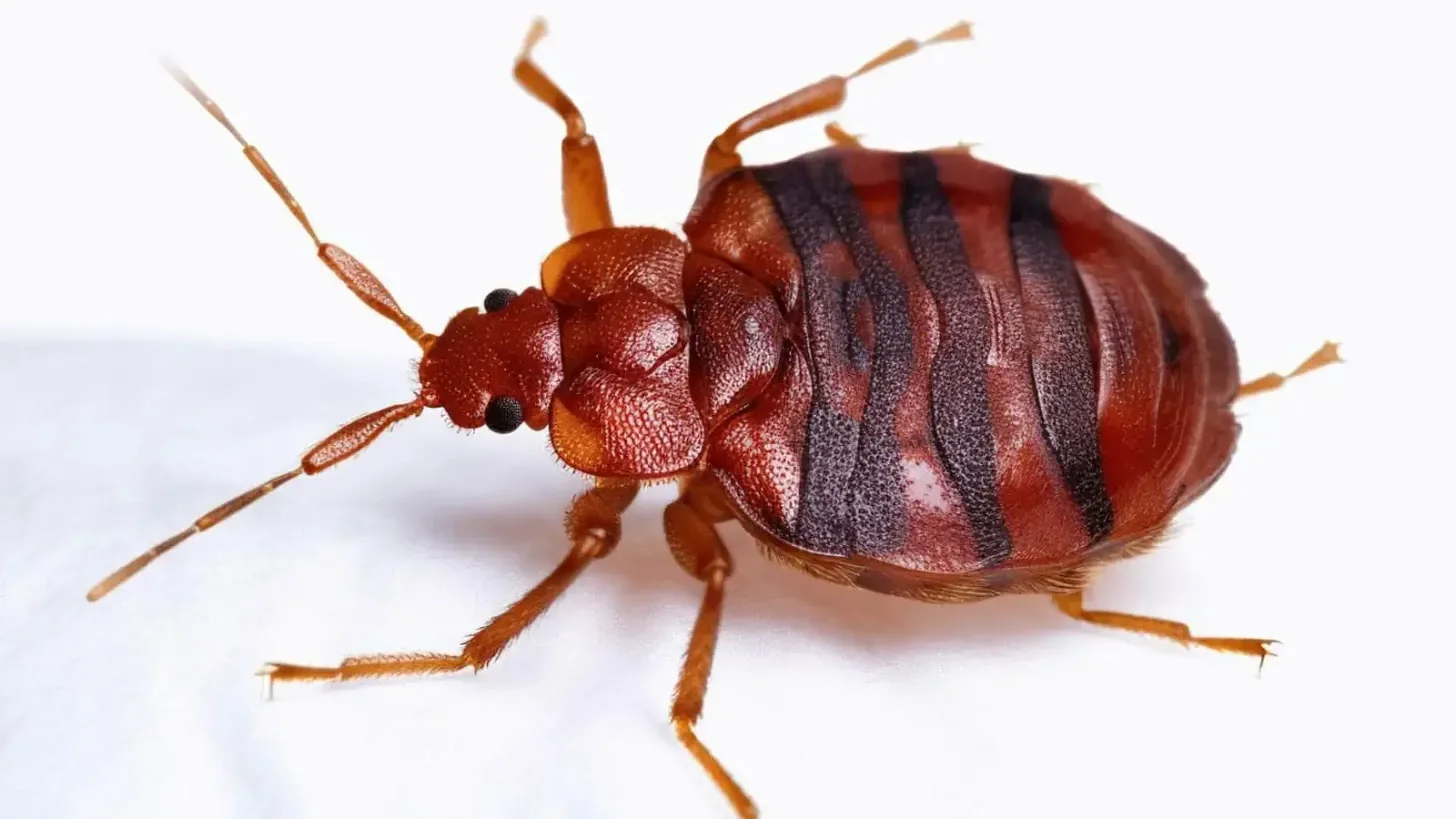
Bed bugs aren’t tiny, especially when you’re only a few weeks old like the little girl whose cot it was. The bugs looked like red apple pips. Moving red apple pips, scurrying to hide in the corners away from the torch light shining down on them.
The young baby and her mother had been taken out of the house and I was following a team of council workers as they examined what had been left behind. It all ended up in a skip. Silverfish in the sink, cockroaches in the kitchen, bugs in the bed. The house was alive.
I went outside to talk to the team leader and we itched and scratched our way through the interview. Afterwards, I went home, showered and shrank my jumper by sticking it in a reallyhot wash.
Insects have followed me around over the years and they keep getting bigger. Stockton-On-Tees was one thing but thirty years later, the insect-fest of the Central African Republic was quite another.
I hate insects of any kind but the ones that seem to find me attractive are the worst of all. Anna Foster and I were making a film and radio documentary about life on the edge of civilisation - 400 miles from the nearest mains plug or water supply - and we’d spent two days flying to the Central African Republic.
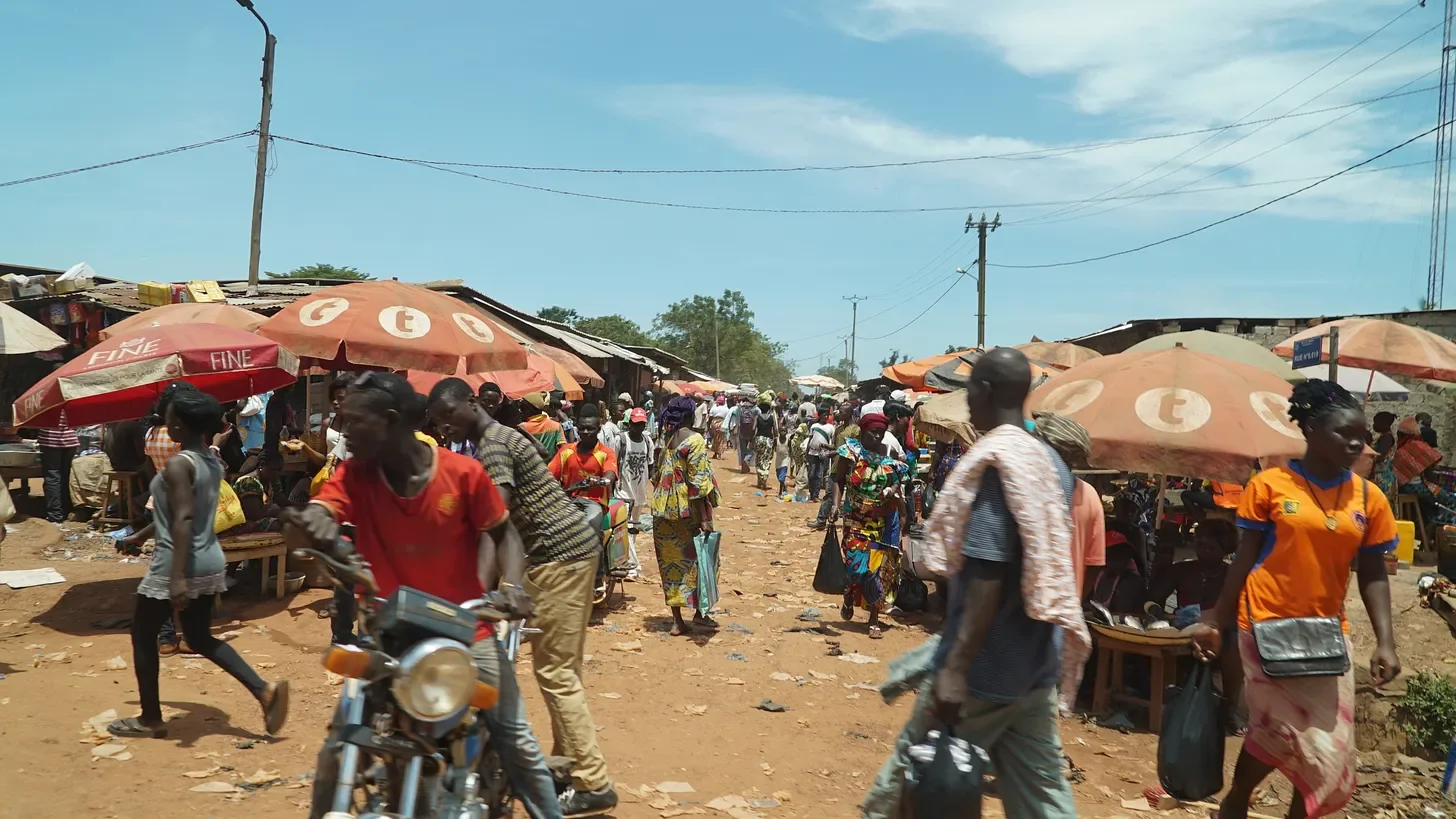
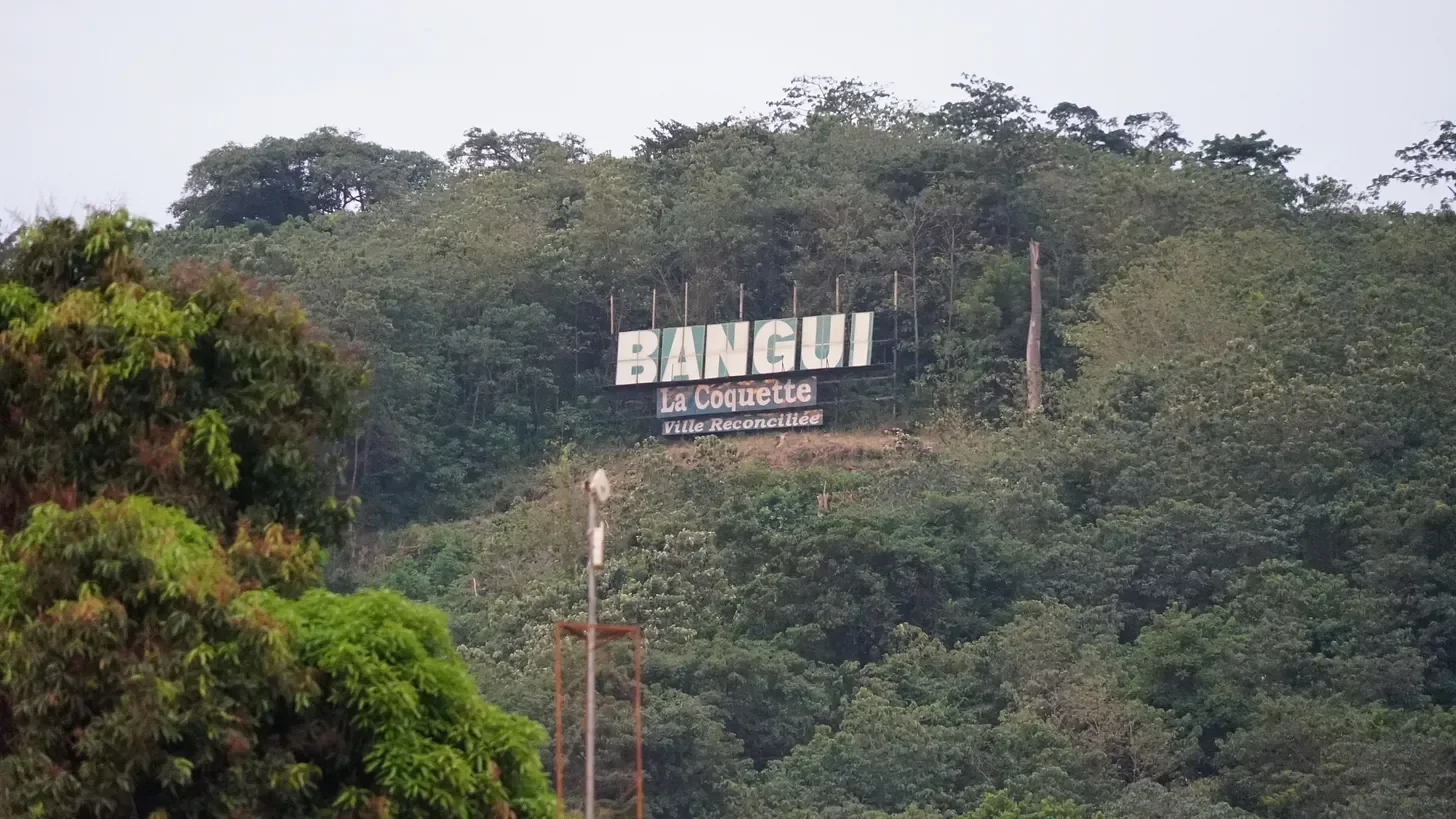
Bangui - the capital - used to be a holiday destination for the French who’d colonised the country in the late 19th century. They’d been hoping for the best when they built a copy of the Hollywood sign on a nearby hillside but, since the 1950’s the chances of mistaking the Central African Republic for California had somewhat diminished. As we arrived, the country was knee-deep in a bitter civil war involving more than a dozen armies all fighting each other.
The week before we travelled to the country, aid workers, the hardiest people on the planet, had started to go in the opposite direction. There’d been an increase in the rampant violence between the gangs who claimed to run most of the place. It wasn’t somewhere to wander around lightly. The last international journalists to go to CAR had ended up dead, their bodies left at the side of the road. Orkhan Dzhemal - a well known war correspondent, Alexander Rastorguev - an award winning film maker - along with camera operator Kirill Radchenko were all shot dead after walking along a road after dark. London’s got a fair way to go if people think it’s a dangerous place to be.
On our first night in Bangui we listened as gunfire echoed off the nearby hillside. A football match in the city had just ended and the fans were fighting one another. This was a regular occurrence. At another game, a few weeks earlier, fans from both sides had been shot dead. There were no arrests. The capital was controlled by the government and they had enough on their plate protecting the city from opposing armies without thinking too much about the welfare of football fans.
The next morning, we boarded a 12 seater plane that bounced and pitched its way over the Central African Republic savanna. Travelling by air was the only option - the journey on mud tracks would have taken us three days and road blocks were everywhere, with looting and murder part of the daily routine.
If we’d thought security in Bangui was bad, then things got a lot worse when we set off. Outside the capital, the country was lawless.
Seriously - it really was. There was no rule of law because there were no laws. Without a police force the gangs that fought for control of the area knew they could get away with anything and never be punished.
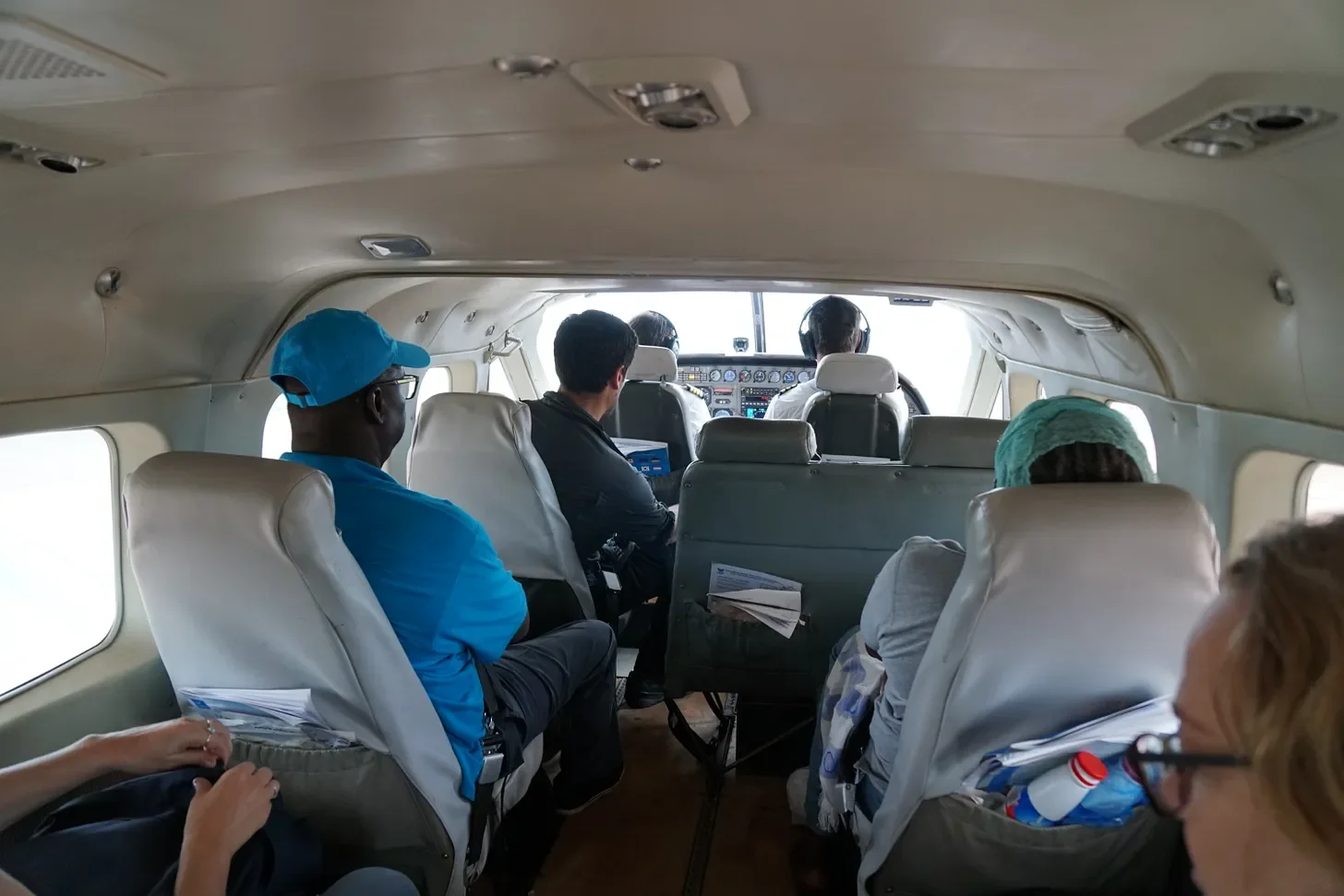
In the tiny plane, we flew on for hours and didn’t see a single road or sign of life but eventually we dropped out of the sky, heading for a strip of grass on the outskirts of a village. Landing checks involved the pilot flying low over the field to see if it was waterlogged. If there were puddles visible then the landing would have to be abandoned and we’d need to fly on to another village and try to make our way from there to where we needed to be.
The plane touched down and bounced back into the air.
“Puddles,” laughed the pilot, turning round to look at us with a big grin on his face. We hit the grass again and this time the plane stayed down and came to a stop at the end of the field.
“Welcome to Kaga-Bandoro,” the pilot said. “Stay safe.”
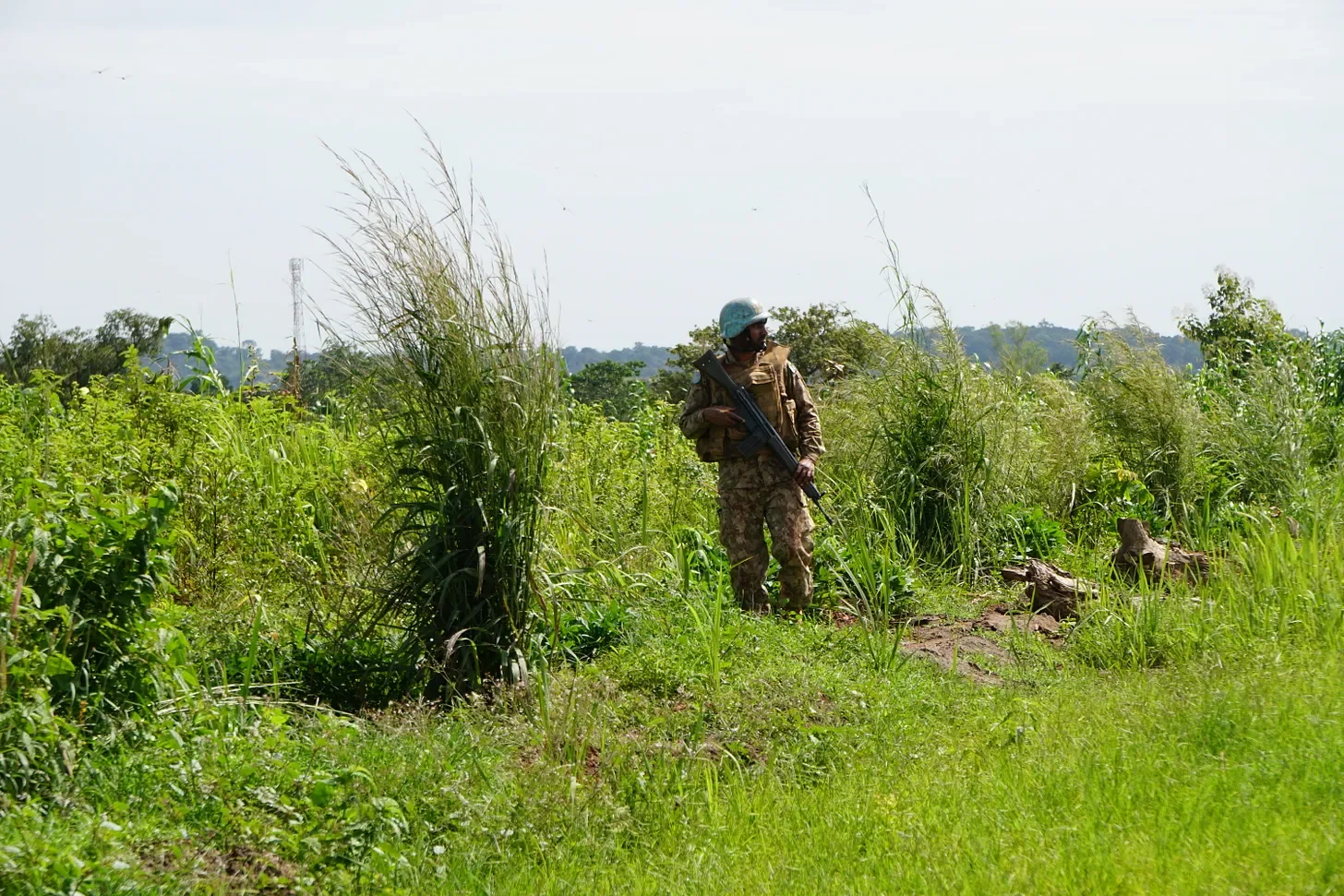
Armed UN peacekeepers surrounded the plane, facing outwards in case of attack. Usually the UN tries to operate with its weapons hidden from view as a sign of peace. Here, they had their weapons locked and loaded. We jumped into white painted UNICEF Land Rovers and drove off towards the double walled compound in the Muslim sector. I’ve heard Kaga-Bandoro called a village, a town and even a city. Each one is pushing the definition to the limit because they suggest at least some level of organisation and officialdom. There was none.
“Curfew until 0600,” we were told. “Nobody leaves the compound.” It was just after 5pm. There was no internet access and electricity was a commodity not to be wasted. Bed. By 9 o’clock I’d finished my book. I turned onto my side, ready to switch off my head torch and go to sleep only for the beam to illuminate a beetle the size of a bar of soap on my pillow. I levitated about two feet into the air. If I’d had claws I’d have dug them into the ceiling and stayed there for the night. Somehow, I found myself flat on my feet by the side of the bed. The beetle scuttled round to face me, its mandibles twitching. This thing wanted blood. I was sharing a cabin with Anthony, whose job it was to protect me. I knew that because it said it in black and white on an email I’d received. He was there TO PROTECT MEand, at this moment in time, that’s exactly what I needed.
“Anthony!” I whispered quite quietly (I’ve no idea why).
Nothing. Lying in the bed on the other side of the room, Anthony had his headphones on watching a film.
“Get the F*CK over here now!”
He heard me the second time and, thinking we were under attack, leapt up. In all honesty, I think he looked quite disappointed when I showed him the beetle that was now wandering around my bed. Bravely, my hero found a desert spoon with a really long handle, scooped it up like a dollop of ice cream and flipped it out of the open door but all attempts for him to look cool and sophisticated vanished as a haze of bugs flew in and landed in his chest hair.
I tried to get to sleep but, in truth, I was too scared to blink. The whole place was alive. There were noises everywhere. Scuttling, scratching, sniggering. Creatures I’d never seen before - even in nightmares - stuck to the wall, watching me with their beady eyes - all sixty four of them - waiting. My mind kept wandering back to a teacher in school telling me not to gawp because spiders climb into your mouth while you’re asleep and lay eggs in your stomach. Utter codswallop… I hoped. Eventually, despite everything, exhaustion got the better of me and, despite the crunching sound as I rolled over onto the next batch of bugs, I fell into a fitful sleep.
Things that slither and creep aren’t always purely nocturnal. I took a trip once to the Syrian/Iraqi/Jordanian border - at one point the three countries fit together like pieces in a jigsaw. No word of a lie, you can be standing in Jordan, take a jump to the left and be in Syria, take a step forward and be in Iraq. It’s just like the Timewarp. I’d always assumed that deserts were the same the world over - huge beaches of fine sand but without the water - this desert though was full of boulders and dead vegetation. Stripped down carcasses of 4x4s lay in the distance. It was over 50º and, like all sweaty British travellers, I was wearing loose, baggy travel combats. A Jordanian corporal in his immaculate tight fitting uniform looked at me, shaking his head.
“Tuck them in,” he told me. He explained this was the perfect environment for snakes to lay in wait. What you didn’t want, I was reliably told, was for a snake to go up your cargo pants. If it was a race between you being able to pull them down and the snake being able to sink its fangs into your upper thigh, the snake would probably win. I took away a valuable lesson - that trouser snakes are real. Luckily I escaped to fight another day.
Back to the main event and in the Central African Republic, it was the second night of our visit. I say ‘night’ but it was pretty much late afternoon and the doors were locked, again, for curfew.
A tank stood guard. In two patrol towers, UN peacekeepers looked out over the savanna for signs of attack, guns at the ready. From the hillsides a few miles away we could see the tracers of gunfire and the dry clatter of Kalashnikovs as the warring factions struggled for control of the area. Bed beckoned.
The next morning I woke and slowly realised I wasn’t alone in my bed. How can I put it? There was something definitely going on under the sheets - I lifted it up to check what was happening….
I was covered, almost from head to foot, in crawling little bastards.
Sidenote: I was going to write “insects” but that would have been incorrect in terms of pure entomology and if I’d written the more correct term, arachnids, you’d have thought
a: I was referring to spiders
b: I was a right smart-arse.
I was covered in ticks, their round bastard bodies bloated from their overnight snack - I’d been the main course.
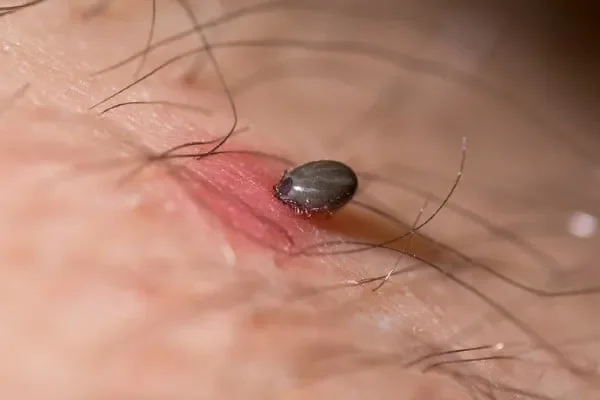
If I’d had any internet access I’d have been able to find out that they could give me a few nasty illnesses - African Tick Bite Fever, Ehrlichiosis, Rickettsial infection, Anaplasmosis, Tick-Borne Relapsing Fever, Crimean-Congo Hemorrhagic Fever, Lyme Disease, Tularaemia and Q fever (although that would mostly only affect James Bond).
Luckily, there was no internet access.
The wriggling, writhing little blood banks were all over me. I leapt up, shaking myself to try and get them off. Dozens fell away but there were more than I thought. Some were stuck to me - didn’t ticks have claws that held on no matter what? How the hell was I supposed to get rid of them?
“Anthony!”
So much for him being my rock. He’d let this happen. Now, of course, in reality he had negotiated our safe passage through one of the most dangerous countries on earth but at that particular moment all I was worried about were the bugs trying to negotiate their way into my passage. I threw a shoe at him and he leapt into action and went for a pee.
He came out of the bathroom and we nodded at each other in that manly sort of way that slightly embarrassed men do when they’re standing naked in front of each other, covered in black ticks in Africa. Eyes to the front, cough and look the other way.
“Time for a delouse?” he suggested, scratching his groin.
Some of the bugs appeared to have died upon contact with me. Others were still sluggishly moving around but the ones that made me most scared were the ones that had already darted for cover into places I’d rather not talk about. We took turns jumping up and down in the shower and some of them fell off but more than a few still wouldn’t budge. Anthony appeared, holding a pair of tweezers.
“Sorry mate, but I promise these will do the trick,” he said.
There are moments in life when you simply have to swallow your pride and let someone get on with what needs doing. Normally you reassure yourself they’re medically trained and have seen it all before.
Still, there we were, two grown men, in a shower in a war zone, taking turns with a pair of tweezers.
We worked methodically. Eyes fixed somewhere neutral. Cough. Nod. Next.
Some ticks came away easily, fat and satisfied. Others clung on with the determination of seasoned insurgents. There are parts of your body you never expect to have inspected under head-torch by a colleague. Suffice to say, by the time we declared each other operationally tick-free, we had reached a level of professional intimacy not covered in any BBC training manual.
We dressed without discussion.
As I pulled on my shirt, I found myself thinking about that baby’s cot in Stockton-on-Tees. The environmental health officer lifting the mattress.
“Well, hello there.”
I’d thought that house was alive but I hadn’t yet realised the whole world is. In Stockton it was bed bugs and in Kaga-Bandoro it was ticks.
Wherever people are struggling - in poverty, in conflict, in fear - something else is always thriving. Scuttling. Feeding. Waiting for the lights to go out.
You can train for hostile environments. You can do risk assessments. You can have your very own, brilliant security.
What nobody tells you is that you will, at some point, be naked in a shower in a UN protected compound, while a grown man you don’t know very well removes parasites from your own, more vulnerable, territories.
If you do go looking for stories in the places where life is hardest, don’t be surprised if something decides to take a piece of you home as a souvenir.