
A Love Letter To Local Radio
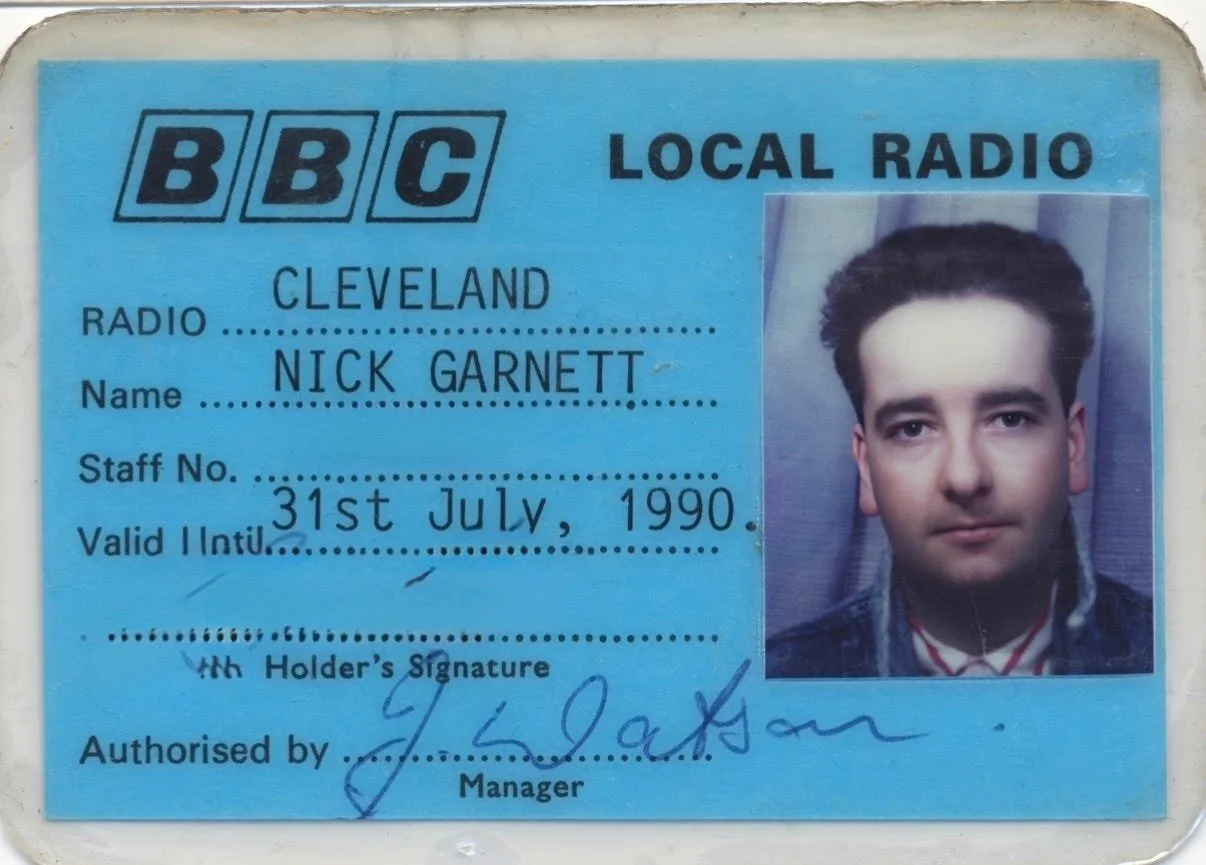
The network of Local Radio stations stretches across the length and breadth of Britain. For more than fifty years they’ve broadcast to their own local communities - often saying exactly the same thing as each other but always in a different accent. The music they play, of course, tends to sound identical - because it is. Dua Lipa in Cornwall sounds the same as she does in Glasgow, so it’s the things that presenters talk about between the music that make their radio station sound unique. Big stories may only happen in one place at a time - a bomb, a natural disaster, a factory opening or a factory closing - but small stories happen everywhere and there’s nothing quite as important and local as the weather.
If rain or sunshine affected the whole of the British Isles in the same way and at the same time there would be no need for Local Radio. National stations are terrible at covering weather stories: if you’re in Brighton and it’s warm and sunny you don’t give a damn if it’s blowing a hoolie in Workington. Admittedly there may be an element of “there but for the Grace of God…” but it’s not enough to sustain much interest. You see, weather is a local story and nothing can cover a local story better than a Local Radio station.
I bet there are some suits, some bean counters, who, now they know that, will be yearning for temperate climes - hoping to hammer another nail into Local Radio’s coffin. Well, tough: bad weather is here to stay and Local Radio’s survival is testament to the topography of this sceptered isle. Surrounded by water, there’s the Atlantic Ocean and Irish Sea off one coast, the North Sea and English Channel off the others. It’s where five different air masses meet. From the North East, the Arctic Maritime Air Mass brings down cold wet air and snow during the winter. Eastern Britain sees itself affected by the Polar Continental Air Mass pushing in hot air during the summer and cold air in winter. North East Britain has little choice but to welcome the Polar Maritime Air Mass from time to time which brings in yet more wet, cold air and rain (are you seeing a picture yet?) and then there are the two, more amenable masses: South East England getting the hot dry air in the summer from the Tropical Continental Air Mass which starts up in North Africa and the South West being bathed in the Tropical Maritime Air Mass - slightly wetter but also warm. As you can imagine, when the winds hit each other there is a tussle. Whichever happens to be the stronger wins out and out of this chaos, in the 1960s, was born Local Radio.
Whenever bad weather strikes, Local Radio stations fistbump each other. Listeners come in their droves to hear what’s open, what’s closed, what’s broken down and who’s soldiering on, regardless. Snow Watch, Flood Watch, Drought Watch and Storm Watch: local weather brings in an audience like nothing else does and out of this maelstrom were borne a thousand stories for reporters like me.
I’ve waded through water, baked in the sun, struggled through snow, been blown off my feet by the gales, I’ve been drenched, parched and frozen. In sub-zero temperatures before dawn in Morecambe, I held a microphone so long it froze to my skin. I’ve had sun stroke and windburn, I’ve risked radiation burns clinging on to satellite transmitters with my bare fingers to stop them getting blown away and every year, without fail, I’ve been asked to get to somewhere cut off by heavy snow.. which always begs the same question “If I can get there, it isn’t cut off, is it?” and my slightly curt question always gets the same slightly curt answer,
“Stop being a smart alec and get on the road.”
Local Radio has been viewed, unfairly, as a training ground for reporters and presenters alike. I kid you not, if you can present a programme in Local Radio with a budget of 25p, a handful of pretty dire songs and a couple of guests and somehow manage to fill a programme that lasts from 4 o’clock ‘till 7 then you can present anything, anywhere. Network luvvies haven’t got a clue what hard work is. Likewise, being a reporter in LR is a tough, tough gig. All these statements are relative, I’ll admit - it’s not tough like fixing roads or teaching children about the concept of ‘one’ or looking after people who are poorly and not as mobile as they once were - but in its own unique way, it is slightly tough. I was once asked to go and get a piece for the breakfast show based on the fact there was a new shop window display in a department store in Carlisle.
True story.
Some people who work in LR will stay there for their whole careers serving their local community while others will see it as a stepping stone to pastures new. For decades some people who work in LR have thought that getting to Network was the be all and end all - and I was one of them. It comes as a slight surprise to them, when they’re plucked out of Exeter or Nuneaton and given a job at national radio and find themselves doing exactly the same stories as they were. Now, however, they have to cover them in a shorter time, with less depth and context than they were given in Local Radio but they labour on under the misapprehension that they’re telling it better than they used to.
The truth is, there is no greater sketch pad than the one provided by Local Radio. It is an opportunity to write longer sentences, talk to more people and tell stories with far more colour than you would ever have on a national tv or radio station. On a national radio station, you’d be given 90 seconds to summarise a story you’d have five minutes to talk about on a local level and the saddest thing a reporter who transfers to a national station can ever realise is that, actually, they had far more fun when they were working in Local Radio. They just didn’t know it at the time.
Or….
at least that’s what I would always tell the reporters from Local Radio who wanted my job. I’m hardly going to tell them the truth am I? i didn’t want them nipping at my nether regions. I thought of them all, years later, as I stood in the late spring sun in Florida, surrounded by concrete, in the very launchpad where Saturn space rockets had taken off and flown to the moon. I was about to meet a real live NASA astronaut, fulfilling every childhood dream a kid from Liverpool has ever had. But more about that another time.