
Did I Just Poison My Way Into A Job?
“Hello. Is that… Nick Garnett? Did you send us a box of tea-bags?”
“Yes…”
“With a phone number written on every one of them?”
“Yes…”
“in silver pen?”
“Yes….”
“Do you happen to know.. was the ink poisonous?”
“Er…”
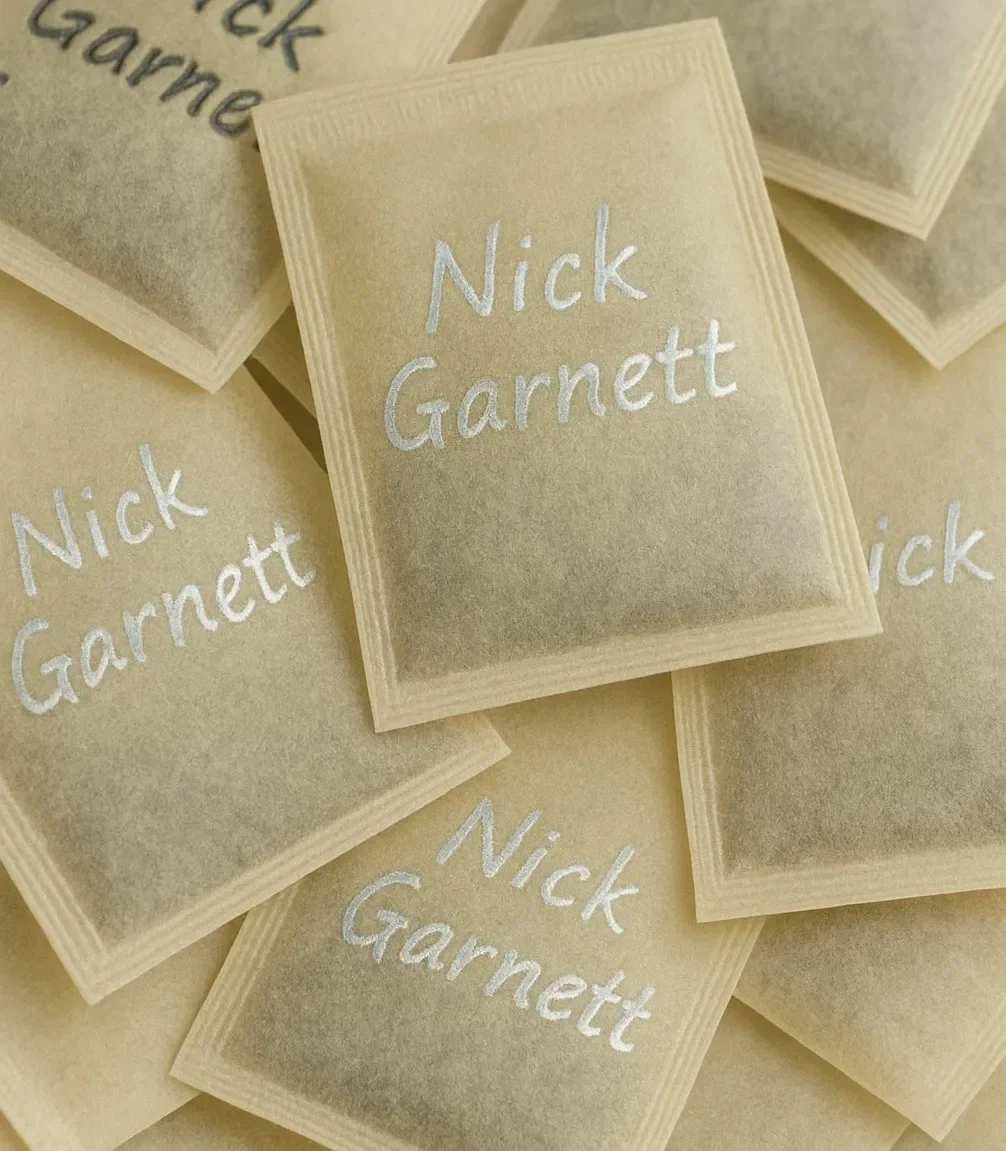
It wasn’t the most straightforward way to try and get a job but they hadn’t responded to any of my letters or phone calls. The risk of poisoning the staff at Radio City, Liverpool’s fantastic commercial radio station, seemed a much easier solution. It worked too (the policy, not the poison). I got a few weeks work experience during the college summer holidays and a foot in the door.
And then I trod on my own foot and shut the door in my face when I decided to go back to college again.
I didn’t get a proper break into the business for another few years. Depressingly, for me, it wasn’t as a result of my skills - or tea bags - but my mum who’d met somebody who was married to the news editor. Nepotism - don’t knock it.
Six months later I was slaving away, in a cupboard under the stairs on Paradise Street in Liverpool city centre sticking together all the half used reels of audio tape used by reporters to record interviews.
I’d hit the big time.
Seriously.
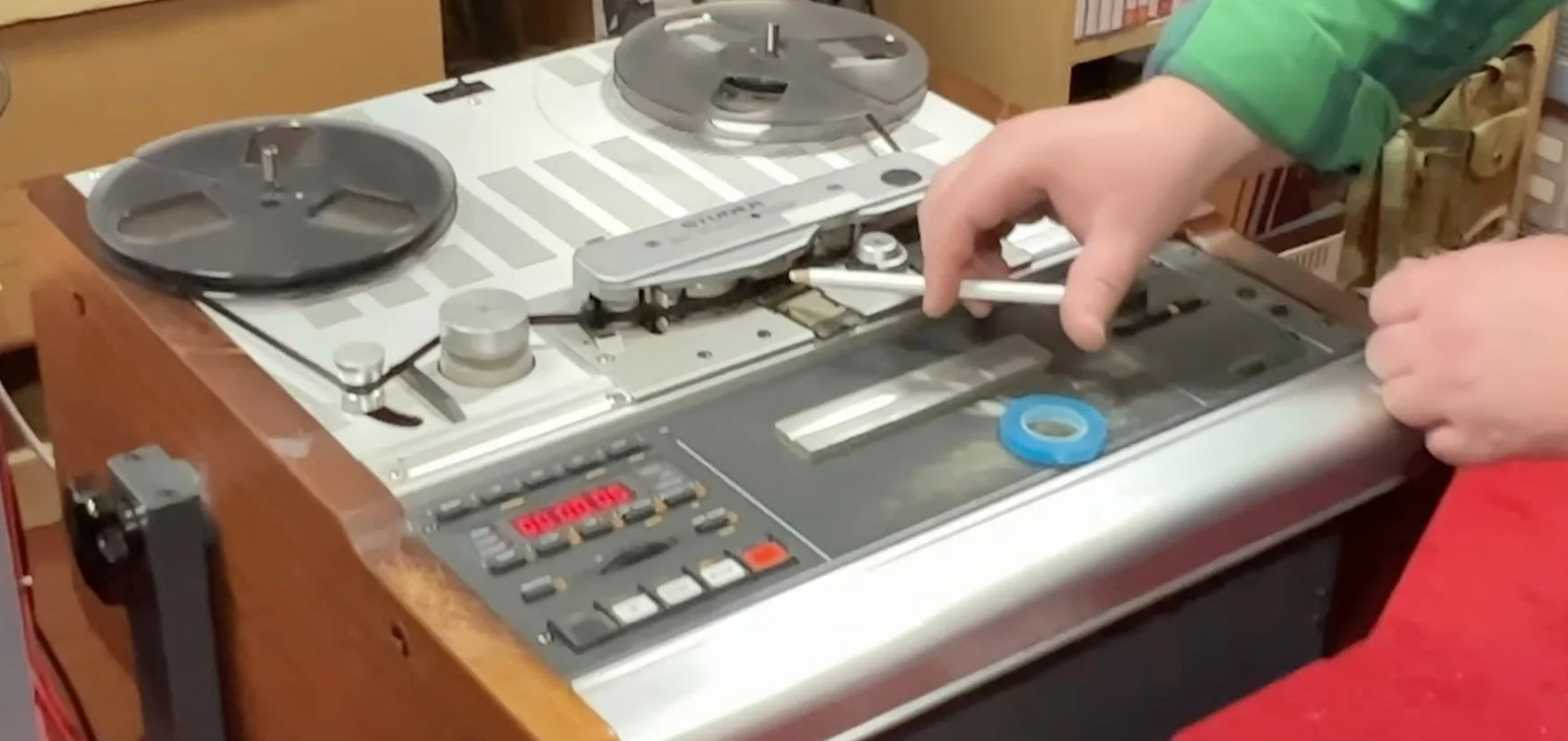
Back then, radio interviews were recorded on reels of magnetic tape that needed to be physically cut - or spliced - together in order for the interviewee to make sense.
This might come as a surprise but most people you hear on the radio or see on television (or even read in print) don’t talk in complete and ‘perfect’ sentences. One MP I knew had a pronounced stammer which was completely edited out of existence whenever they appeared on the Today programme on Radio 4. It would never be countenanced nowadays but thirty-odd years ago it was the role of one of the studio managers, the technical team, to be the “de-ummer” (literally taking out the “ums”) from recorded interviews.
it still happens now - but before you come over all shock-horror and start writing an email to the Daily Telegraph, it’s a core feature of DeScript and it’s used by pretty much everyone EXCEPT the BBC. I’ll explain why another time suffice to say it’s to do with where data is stored and the difference between restorative and generative AI.
It is, undeniable, that - to one extent or another - all interviews are edited. If they weren’t where would you start playing the interview? At the Hello-come-in-do-you-want-a-cup-of-tea stage? Again, lest any scribblers are thinking of getting on their high horses remember that newspapers have always edited quotes (people don’t speak in perfect sentences and, anyway, what do you think “…” signifies?). The truth is that everybody who ever writes down or records what somebody says has shortened quotes - ever since the words “in summary” were invented.
If you want further proof that Interviews have always been edited, take a look at the Christian Bible - which is why Mathew, Mark and Luke’s version of the life of Christ is so different to that summarised by John.
Quotes have always been tailored and tweaked and the rubbish that’s left over is how I started out in radio (which is a neat way of getting back to ME - still stuck in a cupboard under the stairs). Once the good bits of an interview had been taken out, the remaining, unused tape had to be stitched back together so it could be reused and save the radio station a heap of money and thst was my ‘job’.
In time, I progressed to going out and interviewing people wandering around Liverpool city centre- normally for short pieces about anything that happened to be in the news that day. It could be a question about what they were going to have for dinner or it could be their views on existentialism. Most of the people meandering round Liverpool on a Monday afternoon were not big-time existentialists but taxi drivers were always on hand to provide a bit of good (radio) copy.
I owe my career to the friends I made at Radio Merseyside - far too many to name but you know who you are. The ethos at the station was simple: ask lots of questions, learn everything you can off each other so that when the shit hits the fan, you can help in any way that’s needed. Years later, I was slightly surprised to learn it was the same ethos as the SAS had when it was formed.
One day, Radio Merseyside’s Chief Engineer tossed me a huge technical manual.
“Go and take the desk apart in cubicle 2.”
At the BBC, the technical area is known as the cubicle, not the studio. Cubicle 2 had a huge mixing desk - known as a Mark III - made up of dozens of removable panels. Each group of faders was its own replaceable panel.
“Take them all out, shuffle them around and then put them back together. You can’t go home till it’s working again.” It was an invaluable lesson in knowing ‘why’ things work rather then just ‘how’.
I learnt how to interview, how to use different microphones to get the best sound and I was able to watch some of the best radio presenters plying their trade:
Billy Butler and his only-in-Liverpool competition “Hold Yer Plums”
Norman Thomas and his even more worrying competition entitled “What Have I Got In My Hands?” We were never quite sure of the answer to that one.
I’d finished college, was living back home and loving every second of my new life, even if I didn’t get paid much. Every two weeks I trudged off to the unemployment benefit office and signed on. By the time I’d been doing it for six months with no actual job in sight, my parents were beginning to feel I was being played for a fool by the BBC until, one afternoon, I was in the lift when the station manager got in.
“I’ve been meaning to ask you,” he said. “You’re here before I get in each morning and you’re still here when I go home. Now, don’t take this the wrong way, but who are you?”
I explained.
“Not acceptable.”
I thought I was being sacked from a job that paid me nothing.
“From now on, £50 every time you get a piece on the radio? If it’s rubbish you get nothing. OK?”
And off he went through the lift doors.
This was the 1980s and the government was struggling to convince Britain that it was tackling youth unemployment. It wanted as many people as possible to not be on the unemployment register and was willing to do anything and everything to get the figures moving in the right direction, no matter what the cost. I went down to the dole office to tell them I didn’t need my UB40 anymore and was taken over to a side counter where, despite me saying I wanted to stop signing on, they made me an offer I couldn’t understand. They explained it again and it was an offer I couldn’t refuse. I was placed on the YTS - the Youth Training Scheme. It was, by any stretch of the imagination, a fiddle - not mine but theirs.
I stopped signing on and ceased being counted as one of the unemployed in receipt of benefits but they gave me what they called “a training grant”. it meant I could do, pretty much, anything I wanted. I could have been a freelance bin washer, or a freelance gardener or a freelance astronaut. The only thing I couldn’t be was unemployed. All of a sudden, I was on a guaranteed £35 a week plus whatever I could earn from the radio station. I was the country’s first freelance YTS radio reporter - and it was all official.
Stupidly, just a few weeks later, I went and got a proper job which would take me to nirvana - the English Lake District. It is home to the most beautiful countryside in the world… and the least number of news stories you can possibly imagine because there are six times as many sheep living there as there are people. And sheep aren’t very newsy. But more about that another time.