
Superglue & The Birth Of Mobile Journalism
What’s the worst thing you’ve ever superglued by mistake?
Cyanoacrylate was developed in the 1960s but took years to became the product we now know and love. It was first used in the industrial world as a specialist product and went unnoticed by the world until someone stuck their fingers together with it.
It wasn’t long before Loctite started flogging it for £1.99 in Woolworths in tiny plastic pots.
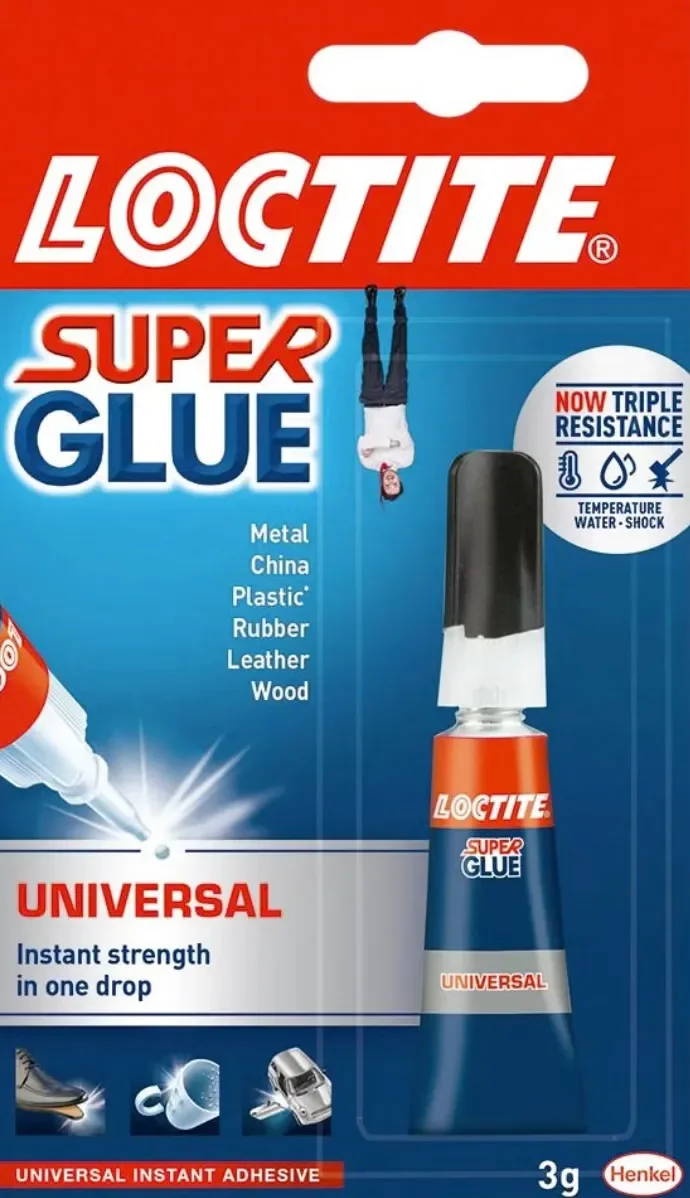
The little metal tubes are designed to rip your fingers apart as you try to open them and then seal shut for eternity after a single use. Superglue is great but it would have been nice if they’d invented superglue remover at the same time.
Tony Todd was a reporter at BBC Radio Merseyside and would often be in a rush to get his interviews edited. He’d go to record a piece with the leader of the council or the Mayor of Liverpool and would need to get the conversation onto the radio twenty minutes later. The taxi ride alone would take him quarter of an hour meaning he had very little time to edit the piece together before it was due on air. He’d have to switch the order of questions or answers and cut out the ums and errs of outrageous politicians by physically slicing the tape into bits and then putting it all back together in the right order using sticky tape.
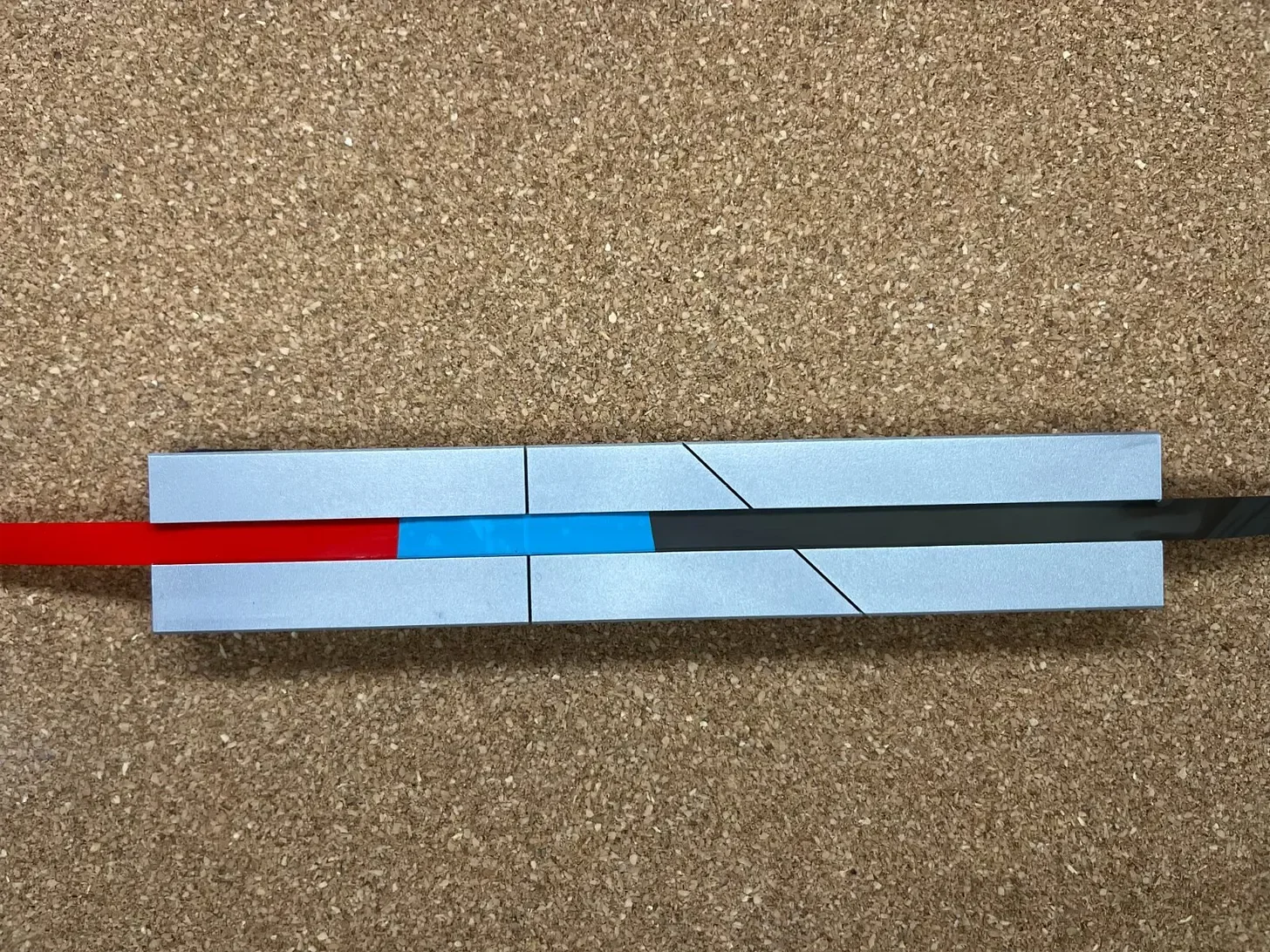
All Tony needed was some way of editing his interviews on the way back to the studio in the relative downtime of the taxi ride. So, he developed a way of editing on his portable reel to reel machine, saving a huge amount of time. It involved gluing what was called an ‘editing block’ to the top of the reel to reel tape recorder. The editing block would make it easier to cut and stick the tape back together. It sounds archaic nowadays but back then it was revolutionary. Interviews made it to air faster than ever - and the move towards reporters being mobile was underway.
Twenty years after he started doing this someone in the United States came up with a name for it - they called it Mobile Journalism (see what they did there?). Not for the first time, Europe had done it first. Some people thought, for a long time, that Mobile Journalism - or MoJo meant using a mobile phone for reporting. Those people were very stupid because they didn’t understand that, in the USA, a mobile was a cellphone. The truth is that it only ever meant that the reporter was mobile. Using the technology from the outset - and training people on it meant that I became known as ‘The iPhone Guy’. It was a phrase that, in years to come, would be pinned to me like a badge.
I’d been working in radio for nearly ten years and was heartily fed up of carrying my reel to reel tape recorder around. Apart from the weight, that I’ve already talked about, it just wasn’t sexy. I’d turn up for interviews carrying equipment that looked like I’d bought it in a second-hand shop. I looked, in envy, at colleagues in commercial radio who used cassette recorders. They were banned where I worked because they were deemed not to be good enough quality but the truth was that the BBC was scared of replacing thousands of tape recorders with new equipment.
If it ain’t broke, don’t fix it - an ideology that has haunted the BBC for decades as camera crews were forced to lug video kit that weighed a ton.
I was told, in no uncertain terms, that the only way we’d invest in new technology was if it was significantly better. Cassettes were not better but then Sony came to my rescue. They developed a system called MiniDisc - a tiny digital disc that was written on by laser - like a recordable CD in a sealed plastic case. It was designed as a replacement for the Sony Walkman cassette player and was in direct competition with another product called DCC - Digital Compact Cassette - which was designed by the dutch company, Philips. The world turned towards Sony because the DCC machines were more expensive and bulkier than MiniDisc.
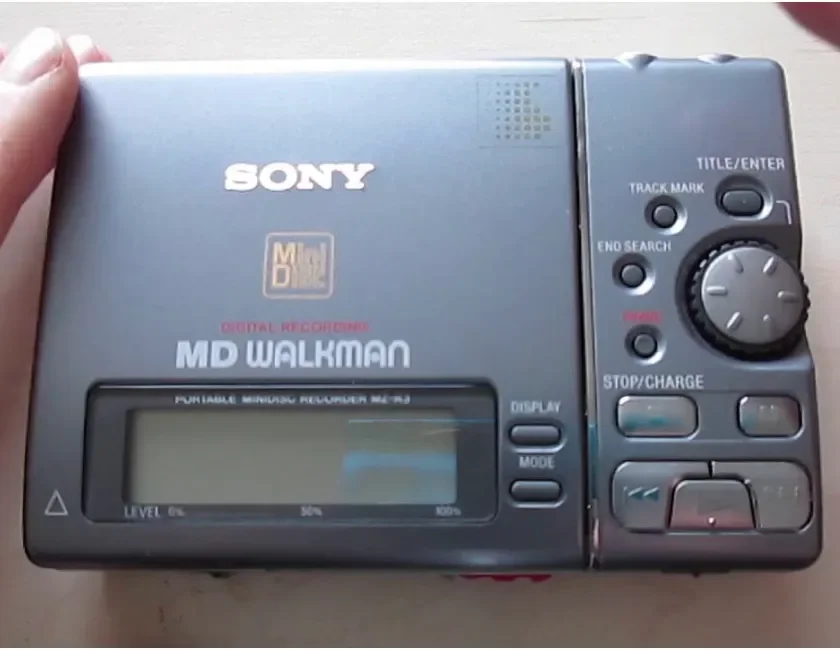
Sony looked like they were onto a winner - but there was a problem. Do you remember portable CD players? Anyone who owned one will know they had useless shock absorbers. The CD would skip if a butterfly flew past. They were rubbish and Mindiscs were the same.
The laser beam couldn’t write the disc properly if the machine was being moved, especially in the crucial last seconds of a recording when it wrote what was called the Table Of Contents. This was a command, written into the disc, that gave the recording substance. Without a Table Of Contents - or TOC - the recording was useless. It simply didn’t exist. This was drummed into reporters the world over. The rule was
IF YOU’RE RECORDING ON MINIDISC STAND STILL UNTIL IT’S FINISHED DOING ITS STUFF.
It was a shame that one reporter didn’t know this. I’ll save their blushes by not naming them.
It was 1997. John Major was the Prime Minister. He was being pestered on a daily basis to name the day of the next General Election. It was his prerogative to call it whenever he wanted but John Major didn’t want to. He was fed up being asked and so had taken his bat home with him and refused to answer anyone who asked him what the timing of the election was going to be. It was the biggest political sulk of the year. And then the day came that the reporter approached the Prime Minister of Great Britain and Northern Ireland on a visit to the North West of England. Major was there to see a factory or a railway or a new shopping centre. He was immediately asked when the General Election would be and, for some reason or other, Major flew off the handle. He was so completely fed up of being asked that he leaned in to the MiniDisc recorder.
“Is that on? Good. I’ll tell you now, so we can just move on from this once and for all. The election will be held on the 1st of May. Happy now? Can we get on with more important things now?”
And that is what is known as a scoop. A BIG scoop. For once, there weren’t any other reporters nearby. All the reporter had to do was run back to the radio car and send the recording into the station but it had to be done quickly. The reporter started to run and as they ran, they realised the Mindisc machine was still recording. They pressed stop on the machine and continued to race towards the radio car.
TOC ERROR.
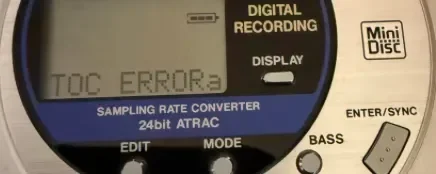
The disc was blank, the interview lost.
And that was why MiniDisc was never the success that Sony wanted it to be. Because nobody trusted it. The reporter was suffering from what is known in Manchester as ‘a complete tizz’ and ran back to try and record the interview again, but John Major wasn’t interested. They ran over to the press officer.
“I don’t suppose you had your little dictaphone thing running back then did you?”
“Yes,” said the press officer. “Why?”
“Well, you’re never going to believe this but a funny thing’s happened…..”
Post Script:
“That happened to me, too,” said my wife as she read the story about the Mindisc.
“What?” I said.
“It was the first famous person I ever interviewed. In fact, it was TWO famous people: the tennis player, Ilie Nastase and Sir Alex Ferguson. I was at Mottram Hall in Cheshire. They were appearing at a tennis tournament there and it was one of the first interviews I’d ever been sent to do. It was the most important interview I’d ever done and yet when I looked down at the disc it just said
TOC ERROR.
The whole thing hadn’t recorded. I hated MiniDisc.”
Post Post Script:
And to compound the quirk of fate, I was at the same event, interviewing Nastase myself for Radio 5 Live. I wasn’t going to meet my wife for a number of years and yet, there we were, reporting on the same story. Like Sliding Doors we could have bumped into one another and I could have helped her out.
Except I probably wouldn’t have.
All’s fair in love and broadcasting.