
Travel Broadens The Mind
The first time I went abroad was when I was 18 - up to that point holidays had only been taken in the UK.
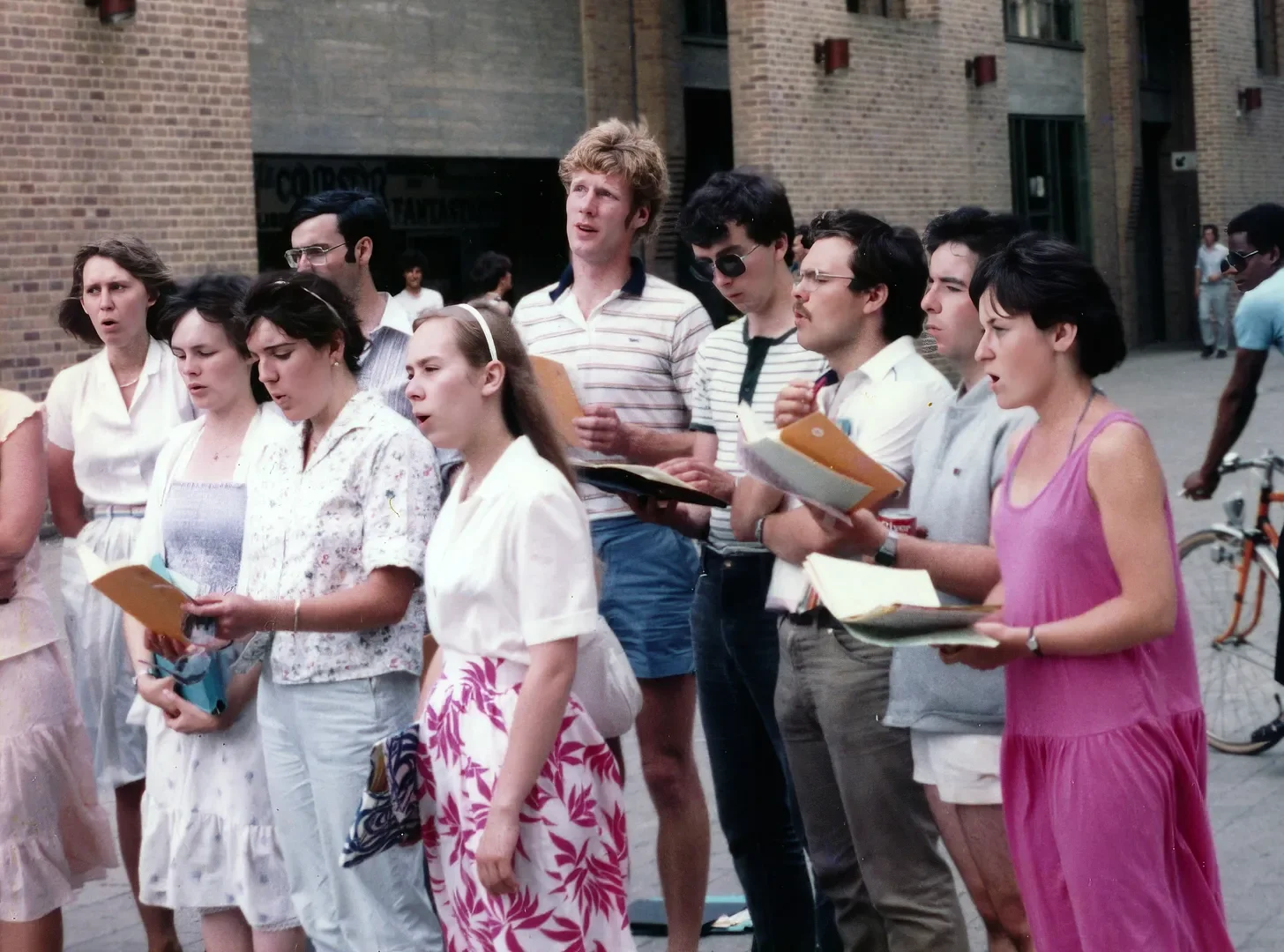
“Why go abroad when you don’t know your own country?” was my father’s riposte as we sat outside a tent in a field in the piss-pouring rain in North Wales. When I had the chance to go abroad, I leapt at it. I was 19 and on my way to Belgium to sing tenor in a choir. That’s me, second from the right on the back row of this picture. Rock and Roll.
If I thought getting a job at the BBC meant I’d be travelling abroad a lot, I was mistaken - especially as I was working in Local Radio where nobody gave a damn about anything that happened outside the immediate area you broadcast to. It was hard enough getting permission to go to the next county, never mind the next country.
The one exception to this rule was The Holiday Programmewhich allowed me to travel to Norway (as seen below) to go skiing, Bulgaria to go skiing and Switzerland … to go skiing.
You’re seeing a pattern here, aren’t you?
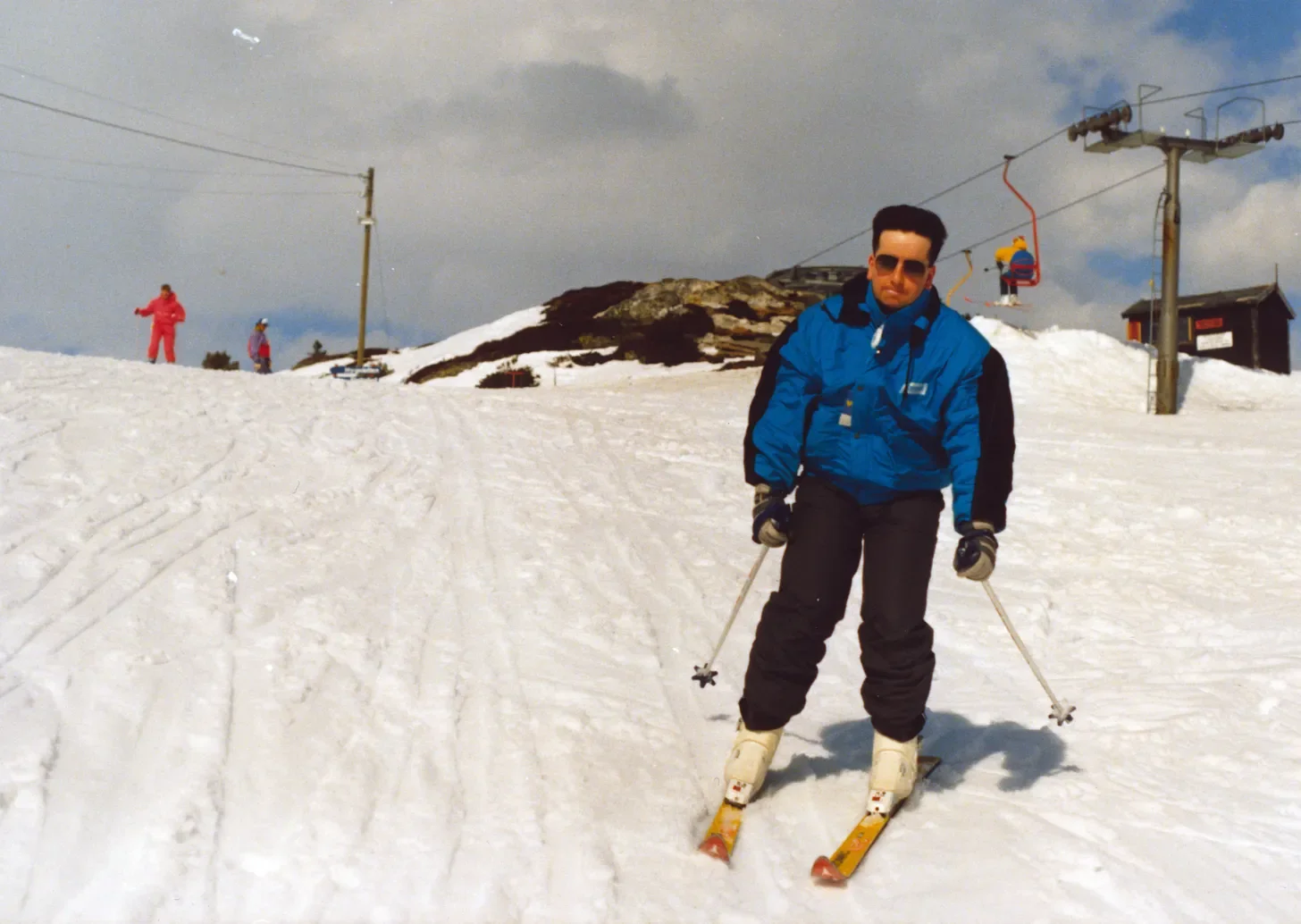
That these trips ever happened was testament to the chutzpah of the widest of wide boys, a wonderful man called Ernie who was a producer at the station where I was working. He managed to do slightly iffy deals with travel firms who would pay the costs of sending a presenter to a holiday destination in exchange for a pretty blatant advert. It would never be allowed at the BBC nowadays - in fact I reckon it wasn’t even allowed back then, but the station boss turned a blind eye - probably because he always managed to blag himself a couple of weeks in Corfu in exchange for a half hour travelogue.
Don’t bite the hand that feeds, flies and puts you up for free.
I owe The Holiday Programme a lot. In fact, it led to me getting engaged once - which turned out to be a surprise to both of us. I’d taken my girlfriend with me to Bruges. Carolyn and I were vegetarian at the time and I was making a programme about Bruges being the foodie capital of Belgium. But there was a problem. The first meal was a seafood platter. The next was moules frîtes. The third day? Lobster Thermidor. I’ll be honest, it was a struggle hiding two pints of prawns in our napkins. We were miserable and very hungry. To cheer us both up I proposed. I don’t know why but it seemed the right thing to do and for some reason Carolyn said yes. Maybe she was hallucinating due to having not eaten for three days. Luckily for both of us, she came to her senses a few months later and I was sent, in a non-holiday sort of way, packing.
Later in life, when I left Local Radio and went to work at network, there was more chance to travel as part of the job and I loved and appreciated every opportunity I got. I was able to meet people from parts of the world I never even knew existed. Every trip was brilliant but there was always one thing I worried about more than anything else - not the story, not my own safety or the rest of the team I was going with. it was something far more serious:
The toilets.
Contrary to popular opinion, you see, journalists very rarely get to spend lots of time in swanky hotels with nice loos. They’re often out on the road for days on end, sleeping wherever they can find a room - and when you’ve got to go, you’ve got to go.
A couple of my colleagues learnt far too much about each other after the Pakistan Earthquake in 2005. They had to sleep inside a rented car for four days and ration toilet paper to two pieces each per episode.
And they were lucky.
One time, I was approaching a checkpoint on the Al-Qayarah to Makhmoor Road running from Erbil in Iraqi Kurdistan. A convoy of four United Nations Land Cruisers was powering through the dusty desert on its way to a still-smoking Mosul.
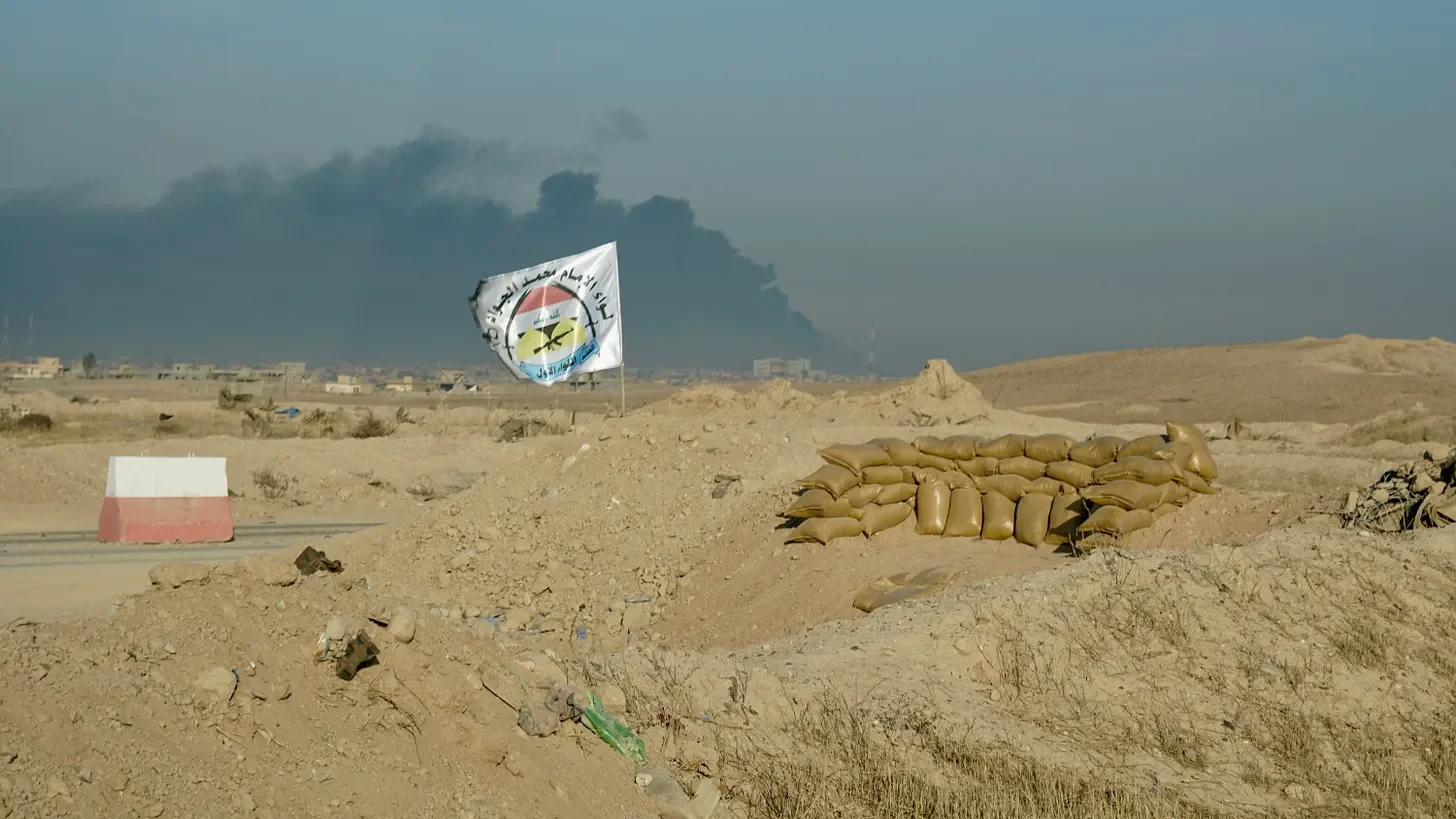
This wasn’t a place to stop and admire the view. The road we were travelling on was pockmarked from roadside bombs and I lost count of the number of bridges that had been attacked.
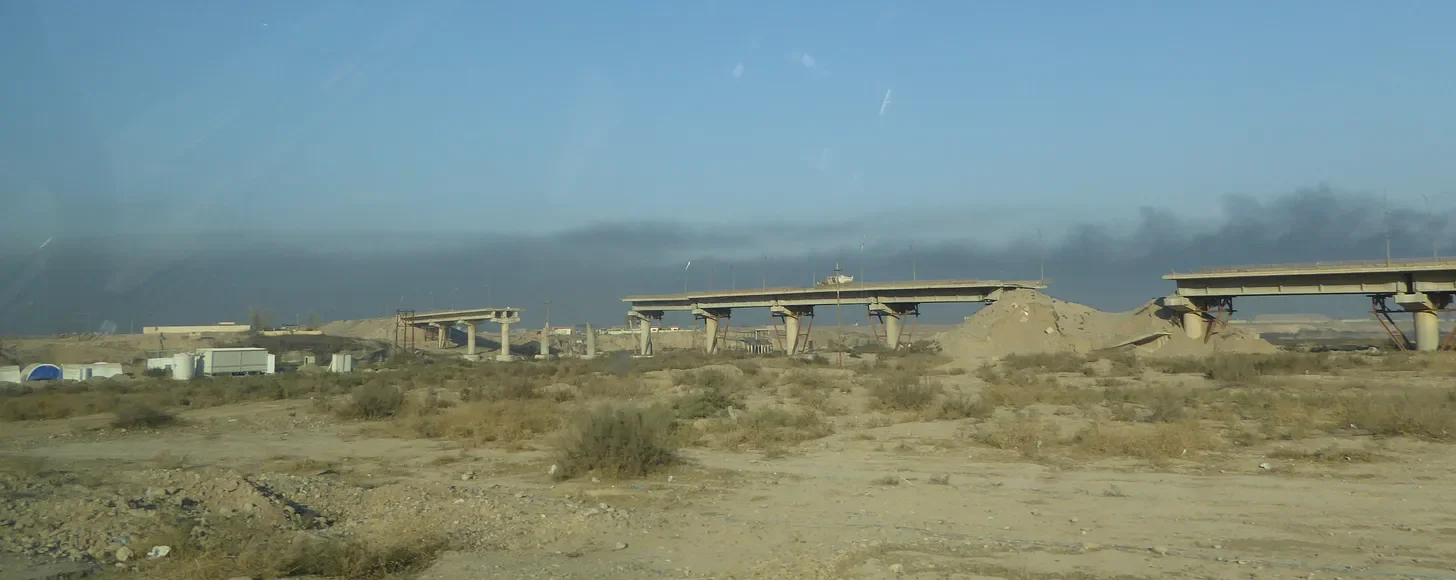
We stopped in the abandoned town of Makhmur. The place was a husk.
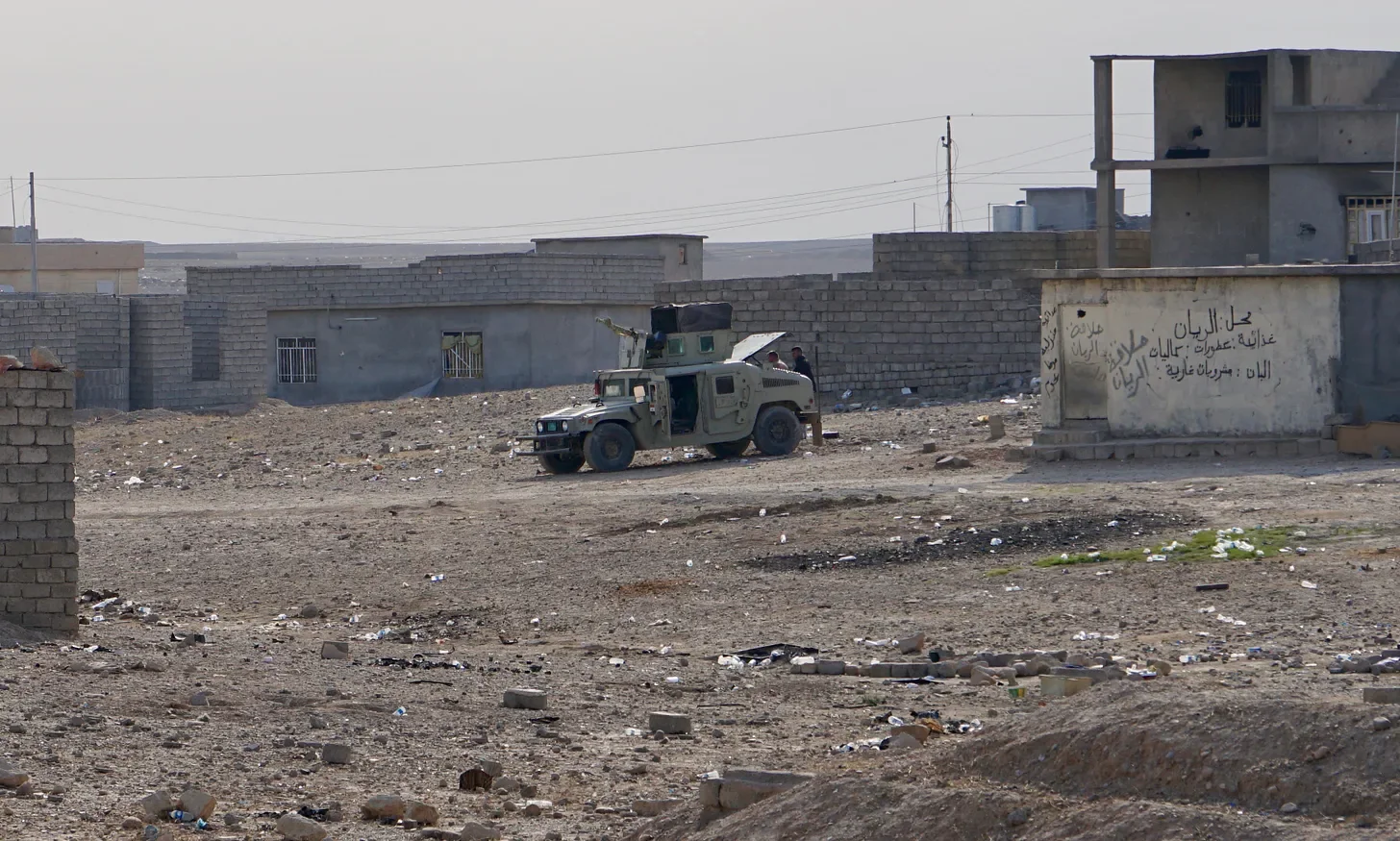
Islamic State had controlled the area, forcing people out of their properties so their soldiers could take them over. A few days before we visited, IS had fled and as they left, they did two things: firstly they shaved their beards off in an effort to blend in with everyone else - we saw hundreds of razor blades abandoned in piles outside the back of the houses. And then, because they were a particularly nasty bunch, they set fire to everything to stop the locals moving back in. The mood in the area was tense. I was filming an interview with some boys as one of their goats ran off into a field next to us. It ran behind a wall…
…and suddenly there was an explosion. A mine.
A puff of smoke rose in the air. The goat didn’t return.
I was using a new camera, attached to a stabilising rig - a gimbal. It meant the camera work looked fluid and I was able to walk around chatting to the boys. That was the point that I realised that what I was holding looked very like a gun and there were snipers on the tops of the nearby buildings…
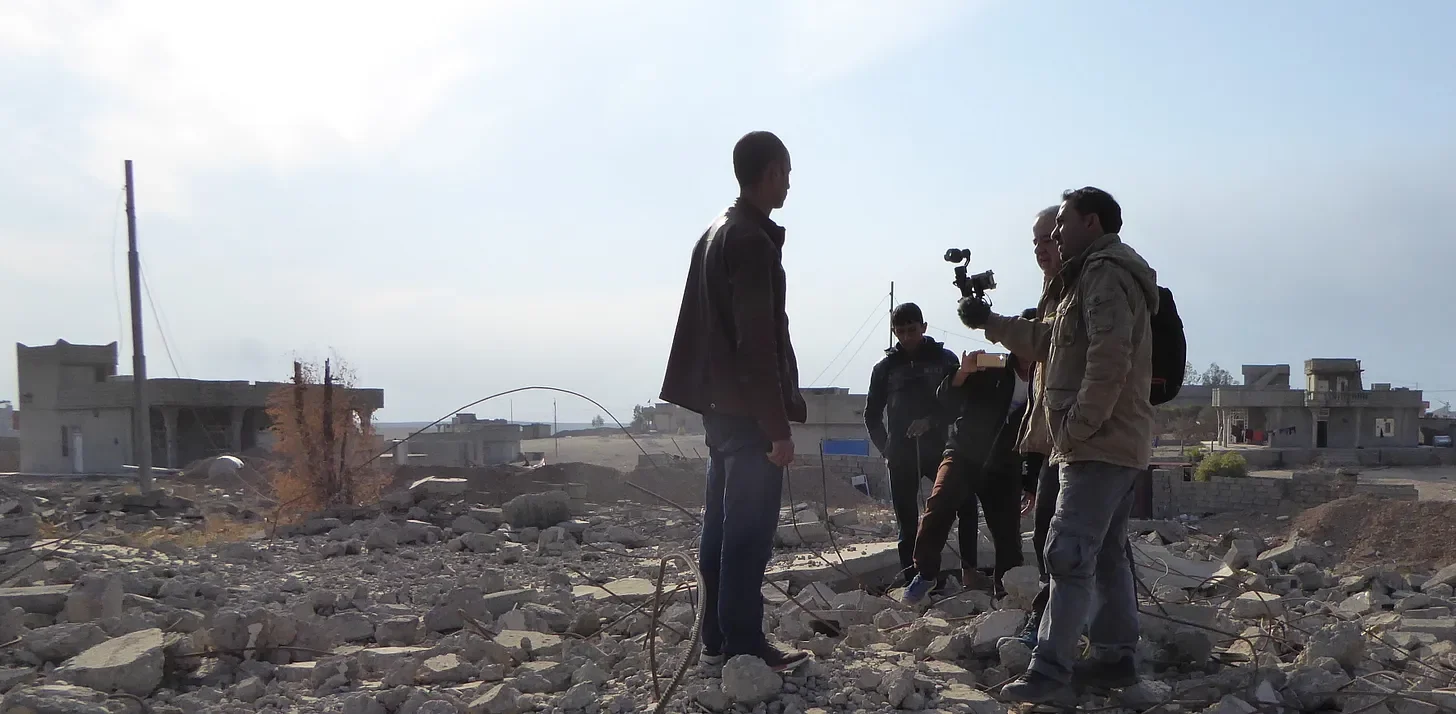
I dropped the camera down and quickly derigged it. We got back into the convoy and drove towards the checkpoint, our hands visible, our windows up, the doors locked. We wanted to get through and out the other side of the area as quickly as possible. The Kurdistan military force, the Peshmerga, were on one side of the checkpoint, the Iraqi army on the other. And this was the moment that one of our team leaned over and said the immortal words,
“Do you think there’s a toilet?”
We were in the middle of the desert. Child soldiers carrying AK47s loitered on street corners, their eyes following our every move. Mosul was controlled by Islamic State and the coalition forces could be heard in the distance, bombing the northern side of the city in an effort to soften it up for the ground offensive. Quality motorway services were thin on the ground.
“Seriously, the toilet. I can’t wait. I need it now”
I leaned forwards and had a word with the leader of our vehicle. We were the third in the convoy. He radio’d the other drivers and we pulled in. We jumped out and made our way over to the Peshmerga commander and after a brief chat, he nodded to a corrugated iron hut, the size of a telephone box. I didn’t go in myself, but the description of what was found in there is burned into me like a childhood memory. No more than a hole in the ground it was the shared toilet for twenty men. I hope their marksmanship improved dramatically once they picked up a gun because, if the toilet was anything to go by, Islamic State had little to fear from the Peshmerga.
As we made our way back to the vehicles a slightly nauseous voice said three quiet words.
“Hand Gel, please.”
What happens in Kurdistan, stays in Kurdistan.
I have no idea how the real, proper, hard core working 45-weeks-a-year overseas correspondents cope. I’ve always been a bit of an amateur travelling hack - after a week or so, I tend to be back home with a flushable loo, soap and a soft clean towel. But I ask you this: whenever you see a report from a far flung corner of the world, think about the journey there and the journey back. Think about the team who get to know far too much about each other and then have to try and forget it and finally, remember that the worst things that happen will always involve toilets.